Rear Windows
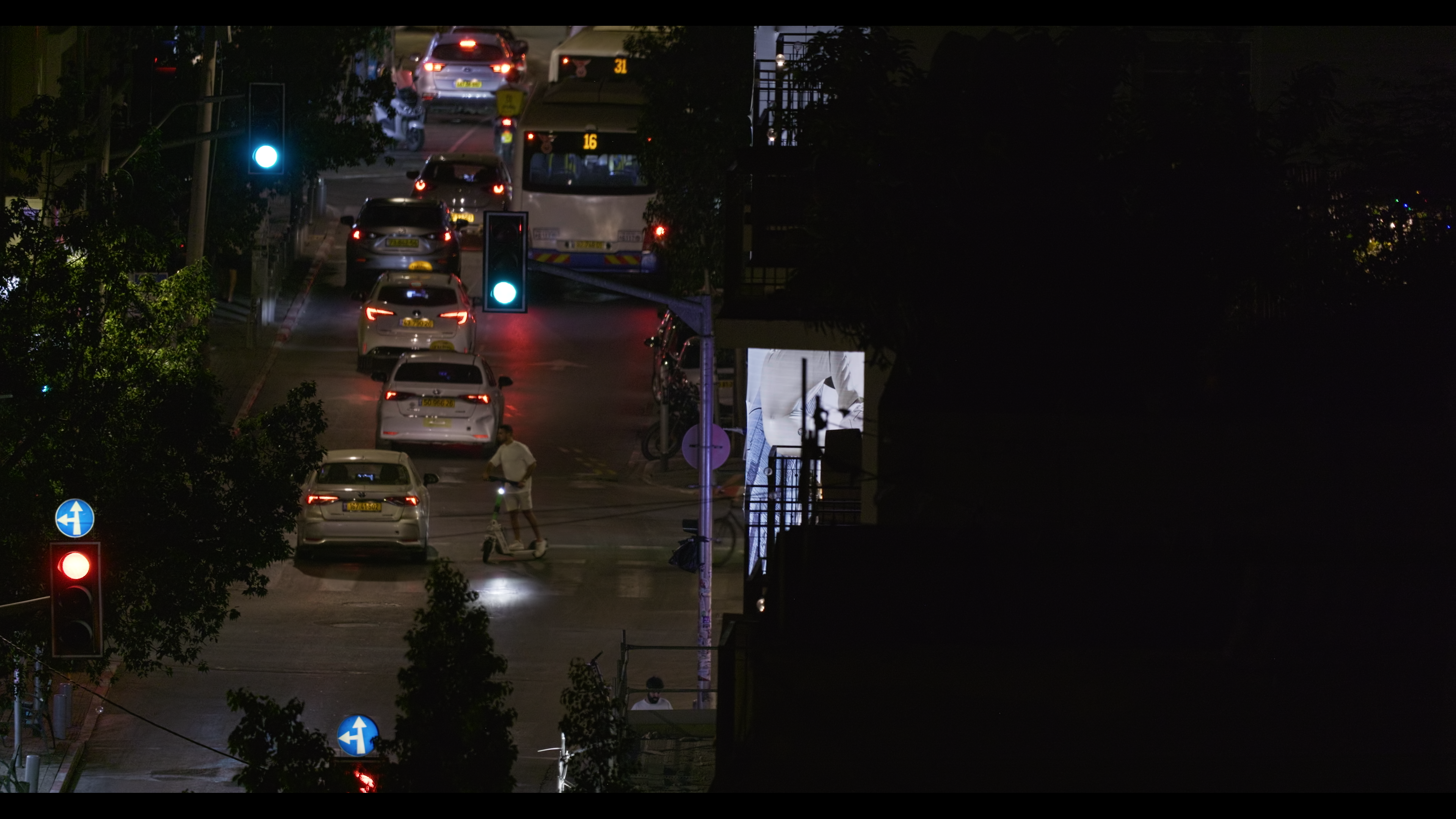
NAZA was filmed at night, on rooftops cast in shadow. Israeli soldiers, their faces obscured by darkness, describe the surveillance technology used in the campaign in Gaza. “NAZA” is the Hebrew acronym for collateral damage, used to denote the number of civilians the military expects to be killed in a given air strike. Behind the speakers, illuminated windows of Tel Aviv high-rises reveal disembodied figures, television screens, furnished rooms, the quiet banality of domestic life.
The film, directed by Yuval Abraham and Rachel Szor and produced by the Guardian, premiered at the Venice Film Festival in September, where it was awarded the Special Jury Prize and received a record 25-minute standing ovation. In the following days, Benjamin Netanyahu denounced NAZA as treasonous and Israel’s cultural minister threatened to strip Abraham and Szor of their citizenship. Protesters gathered outside the filmmakers’ family homes, chanting, “Death penalty for traitors.”
Meanwhile, some critics found the film’s perspective and critical reception to be yet another instance of the marginalization of Palestinian voices and questioned the inherent value of the project. “It’s all there. So what will this film add?” asked the Palestinian poet Mosab Abu Toha. “How will it move anyone to action to stop these war crimes when the people living through them have been documenting them in real time, over and over again?”
In early October, the Diasporist convened this forum in order to discuss NAZA, its reception, its potential to effect change, and how it fits within the tradition of “perpetrator cinema,” a genre that explores the psyche and the moral reckoning of those who have committed atrocities. Contributing to the conversation are Rasha Salti, a curator and researcher; Marc Siegel, a scholar of film and visual culture; Christoph Terhechte, a film festival director and journalist; and Ben Ratskoff, a writer and scholar of Holocaust, genocide, and memory studies.
NAZA is currently showing in theaters across Europe and the United States. In late November, the Guardian will be releasing NAZA to stream for free on its website. In the meantime, Israel has escalated its attacks in the West Bank and continues its atrocities in Gaza, even after the declaration of cease-fire last year.
As always, the Diasporist invites responses from our readers to this forum. Send your thoughts to [email protected].
– Julia Bosson
The Call Is Coming From Inside the House
Rasha Salti: Christoph and I watched it together at night, and I slept with a great deal of difficulty. NAZA will haunt me for a while.
Marc Siegel: I found NAZA devastating. I also watched it at night with a few close friends, and we couldn’t really speak afterwards, which perhaps had as much to do with the soldiers’ testimony as with how Abraham and Szor end the film: the footage of the father looking for his family members in the rubble, which is the only image of Gazans in the documentary.
I was very struck by the analytic quality of the film. It was a formally tight work, with a focused, clear argument, that makes a strong case for the systematic nature of Israel’s genocide. One soldier refers to himself as a cog in a machine. That seemed to be an emblematic statement.
In an article on NAZA in +972, Sebastian Ben Daniel convincingly brought in Hannah Arendt’s concept of “thoughtlessness” in relation to Eichmann and the bureaucracy that organized the Nazi genocide. I hadn’t expected this link to be made so clearly and directly in the film, without pathos. This is a film about how the military bureaucracy and hierarchy allows for individuals to thoughtlessly relieve themselves of responsibility for contributing to the murder of Palestinians.
Christoph Terhechte: Marc, you say analytic, and I think that’s a good term. I was surprised at how formally sophisticated NAZA is, much more than most activist films, and how skillfully the filmmakers create an extremely intense atmosphere, nighttime Tel Aviv on a roof.
You could argue that buildings are the leitmotif within the film. The soldiers speak about buildings being destroyed in Gaza as you see the buildings of the upper class in Tel Aviv, buildings which could be the homes in which those soldiers actually live. This creates a parallel between the buildings being destroyed with human beings in them and seeing humans go about their lives in the buildings around them.
The tension this generates is a formal choice and it makes this film particularly strong, because you understand that the destruction comes from the well-off center of Israeli society.
Ben Ratskoff: It is a rather quiet film, in contrast to the filmed representations of atrocity in Gaza, in which the audio is overwhelming. The quiet acoustically shapes the film’s cold, analytic atmosphere of perpetration. Like you, Christoph, I was struck by the leitmotif of buildings in Tel Aviv. Not the city in general, but the homes, apartments, and then the TVs playing inside the apartments. The only way the film shows the media coverage of October 7 and the government’s genocidal statements is via those TV screens. I felt like the film was about Tel Aviv, about the atomization and uniformity of the liberal, urban environment, as well as the mediatization of trauma and threat that produces grievance and aggression. Together, they show how this late-capitalist metropolis produces obedient soldiers and compliant citizens.
The film also enacted a certain kind of surveillance; the camera surveils people in their apartments who don’t know they’re being watched or filmed. In terms of the doubling that Christoph was speaking about, between the destruction of homes in Gaza and life in these high-rise apartments in Tel Aviv, part of that doubling is also about surveillance. There’s something quite clever and also chilling about forcing the viewer into this voyeuristic dynamic.
“This raises the question of whether perpetrator cinema needs to show its victims, or whether it would be possible to really focus on the perpetrators without having to present proof of what the victims look like.”
CT: I found the scene at the end that you mentioned, Marc, completely unnecessary. I don’t think it contributed to the film. Before that point, it’s up to your imagination to associate images with the testimonies, and suddenly you see the horror inflicted upon this father of a family. It’s as if the film thought it needed the footage to convey its message, which I don’t think it does.
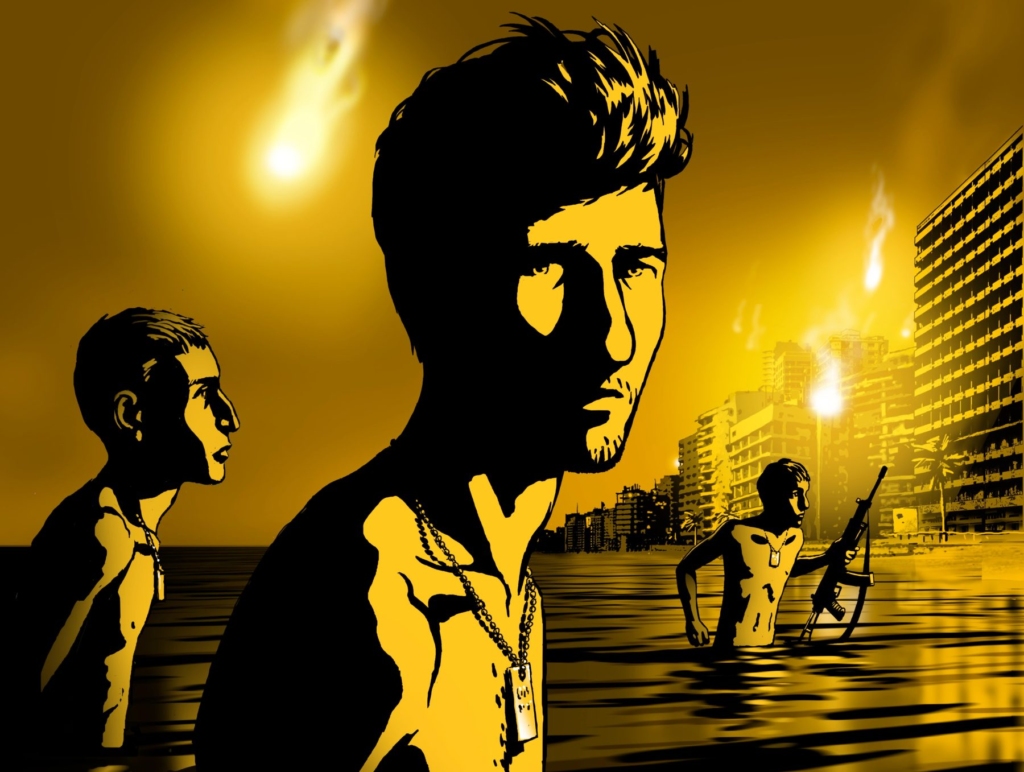
The scene reminded me of Ari Folman’s Waltz with Bashir (2008), an animated film about the trauma of Israeli perpetrators in the 1982 Lebanon War. At the end, as if the film didn’t trust its own animation, it adds documentary images from Sabra and Shatila. For me, this raises the question of whether perpetrator cinema needs to show its victims, or whether it would be possible to really focus on the perpetrators without having to present proof of what the victims look like.
RS: I don’t agree with Christoph. The Western world took a very long time to start broadcasting audio and visual documentation from Gaza. These are images that were never shown by any French network, for instance. And on social media, given the way the algorithms work, a general audience could very easily not have seen them.
MS: I wondered if this was an attempt not to allow us to forget the effects of this violence and to remind us not to let this film about the perpetrators overwrite those images made by Palestinian journalists documenting their own decimation at the hands of Israel. Perpetrator cinema is not about or for the victims, but it was an extremely powerful ending.
CT: This is not a film about the devastation and the suffering in Gaza. It’s about people who are causing havoc by giving commands remotely on a computer.
BR: I’m ambivalent about the ending. But, for me, there was an obvious reference to the “Where’s Daddy” mechanism discussed in the film. Whereas the intelligence officers admit to using audio surveillance of children to confirm if their fathers are home, and thus choose that moment to strike, the father at the end returns to ruins calling out for his murdered children.
Shadowy Confessions
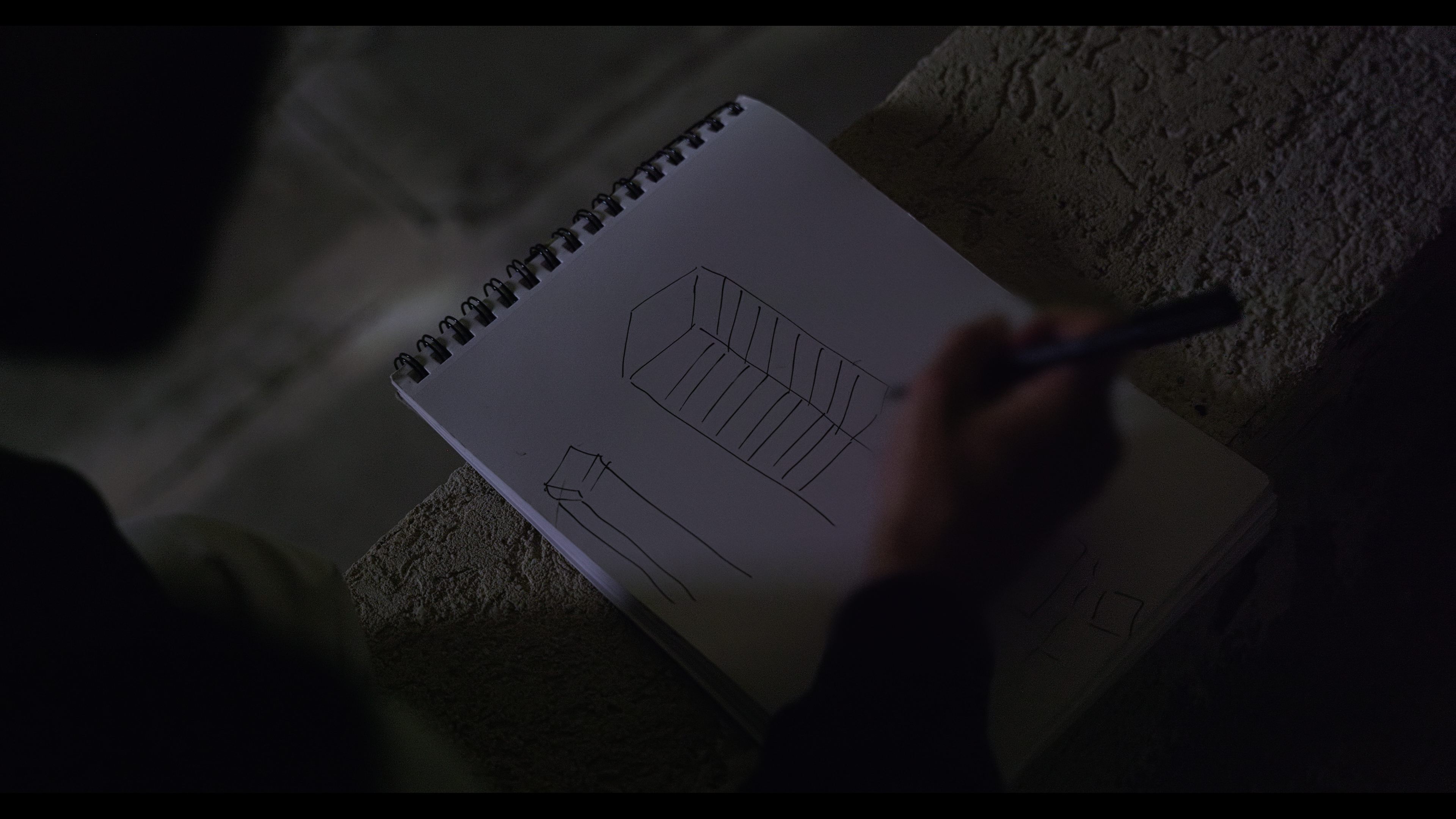
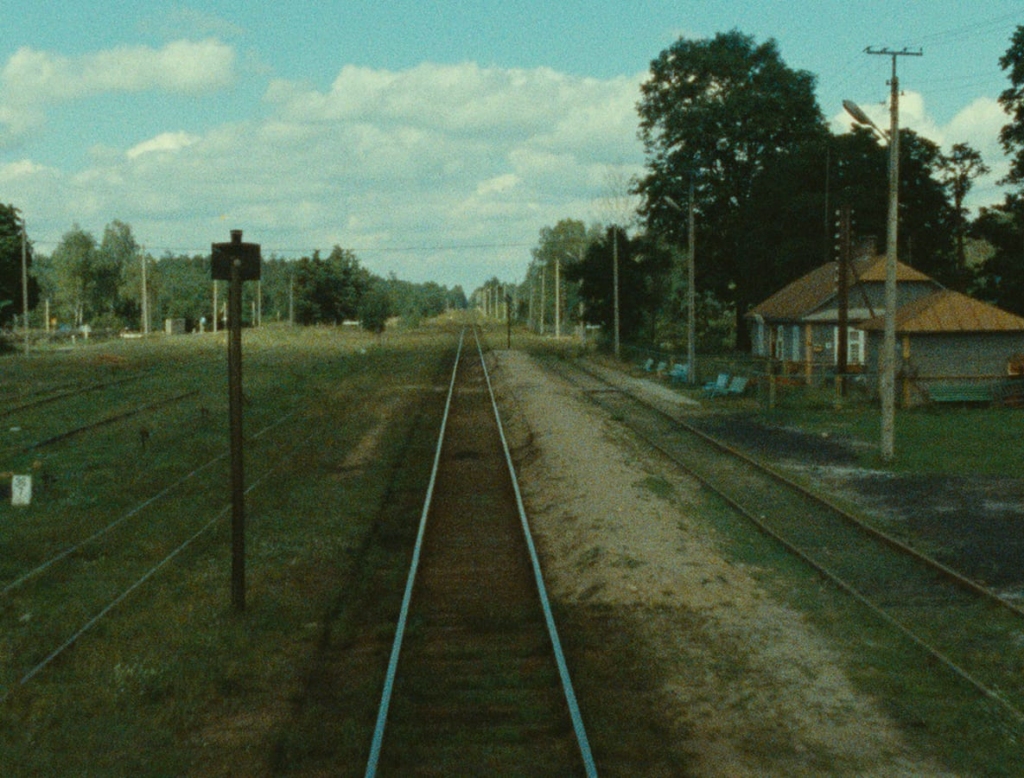
BR: NAZA includes an explicit visual citation of Claude Lanzmann’s Shoah (1985), the nine-hour Holocaust documentary of interviews with Jewish survivors, German perpetrators, and Polish bystanders. Abraham also had something of a Lanzmann approach to documenting testimony, a meticulous, unrelenting insistence that his subjects reconstruct the minutiae of the violence. “Tell me, were you standing here or there?” Lanzmann would ask. And Abraham in this film: “Draw it for me.”
This style is not without its problems. Some, such as Marianne Hirsch and Leo Spitzer, have argued that the obsessive focus on detailing the death machinery and how it operated can ultimately sideline the subjective experience and interiority of victims, ironically reproducing the perpetrators’ dehumanizing and objectifying perspective. But it is also a kind of adversarial approach that works to expose perpetration in the face of psychological defenses and societal pressures to conceal.
The illustrations that Abraham asks the intelligence officers to create on paper also made me think of The Act of Killing (2012) by Joshua Oppenheimer, in which he asks perpetrators of the Indonesian anti-communist genocide to reenact their violence for cameras. There are many obvious differences, of course, but having the perpetrators reenact or, in this sense, draw from memory to reconstruct their acts of perpetration, and then documenting that process, brought that film to mind for me.
The drawings in NAZA seem to serve a similar function in mediating, and thus facilitating, a confrontation with the violence they inflicted, or are inflicting. But the drawings themselves have the opposite effect than in Oppenheimer’s film. They are not flamboyant performances but rather illustrations of buildings from an aerial perspective, of squares and rectangles, not human beings.
RS: I was reminded of two other films. The first is Massacre (2005), co-directed by Monika Borgmann, Lokman Slim, and Hermann Theissen, which features interviews with six men who had participated in the Sabra and Shatila massacre in 1982. The directors film the perpetrators in a room, seated on chairs, lit in such a way that we don’t see their faces. Their identities are “protected” and their voices altered. It’s a claustrophobic film.
The second film I was reminded of is Avi Mograbi’s The First 54 Years: An Abbreviated Manual for Military Occupation (2021). The film is crafted from the archives of Breaking the Silence, an association of men and women who served in the Israeli military whose aim is to end the occupation. The material spans from 1948 through the first 54 years of the occupation of Palestine. Mograbi, in this case, is present: He plays roles, acting as an Afrikaans mercenary or security consultant. While the former soldiers are testifying, their faces are uncovered. They are often filmed inside their homes.
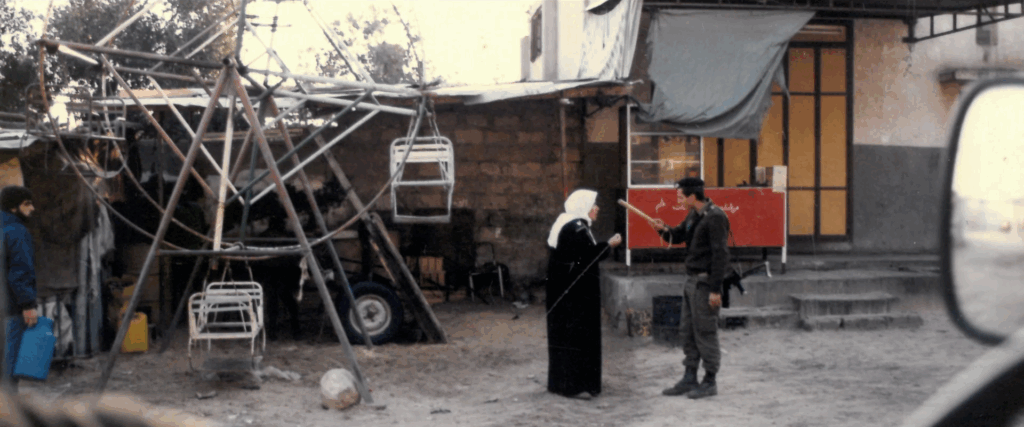
MS: I also thought of Avi Mograbi, particularly Z32 (2008), in which a former Israeli soldier seeks forgiveness for his participation in the revenge killing of two Palestinians. The film digitally obscures the faces of the soldier and his girlfriend. Mograbi explicitly thematizes the ethics of providing anonymity for the soldier, wondering if he should instead turn him over to the Israeli justice system.
RS: The question of anonymity is typical of perpetrator cinema. It is more relevant here because the genocide is ongoing. Abraham and Szor say that it was important to film in Tel Aviv because these are soldiers that hail from the same privileged backgrounds that they do. These are not crazy, hyper-ideologized settlers that European and American societies can point to and say comfortably that they are different from them. These are soldiers who travel abroad and go to universities in the West. These are people you can find in a café in Paris, Marseille, or New York.
MS: I was trying to come up with examples of perpetrator cinema that were made at the time of perpetration. Perhaps some of Avi Mograbi’s films. But that is a significant point about NAZA: These people are leaving the cafés, clubs, and Abraham’s interviews in Tel Aviv and returning to work to continue the killing and destruction they describe.
CT: This kind of immediate perpetrator cinema is a new phenomenon. It requires an immediacy and a media savviness that in former conflicts was not there. It also requires a society in which you are able to make films that criticize your government and show that it is in fact committing a genocide.
“NAZA is a perpetrator cinema that doesn’t psychologize or individualize the perpetrator.”
BR: I was thinking of When the Mountains Tremble (1983), which is a documentary made in Guatemala at the height of the genocide against the Maya population. The filmmakers, Newton Thomas Sigel and Pamela Yates, got one of the military generals to speak on camera about his responsibility for the counter-insurgency campaign, and the footage was later used as evidence against him in a Guatemalan court.
The exposure the NAZA filmmakers are able to enact on these rooftops, all while preserving the subjects’ anonymity, is quite clever. This is in contrast to the perpetrator testimony in Shoah, which is done in highly confined environments, with hidden cameras in family apartments, for example. By contrasting the anonymous silhouettes with the lit apartments behind them, there is a concealment of the individual perpetrator alongside an exposure of society. That leads us away from the courtroom, which really can only focus on individual perpetrators. The film takes what the perpetrators were saying seriously, that they are cogs in a machine, and instead of trying to indict the cog, they were exposing in visual form this broader societal machine.
MS: It seemed to me that this is perpetrator cinema without perpetrator trauma. There’s one soldier who reflects about going to Poland as a kid and wondering how the Holocaust could have happened. How could the Nazis have done this? They were evil. But now he, a cog in a machine, is also facilitating the mass murder of a people. He seems to ponder the implications. But that doesn’t really seem expressive of trauma. Maybe that will come.
In Waltz with Bashir, the psychological trauma of the perpetrator is the whole point. NAZA is a perpetrator cinema that doesn’t psychologize or individualize the perpetrator. I found it difficult to separate testimony of one person from the testimony of another. Sometimes I would be able to do that through the background and the setup, recognizing the same angle of a building, which allows us to recognize a person from before.
I very much appreciated that even if the trauma is there, the film doesn’t spend time with therapy for the perpetrators.
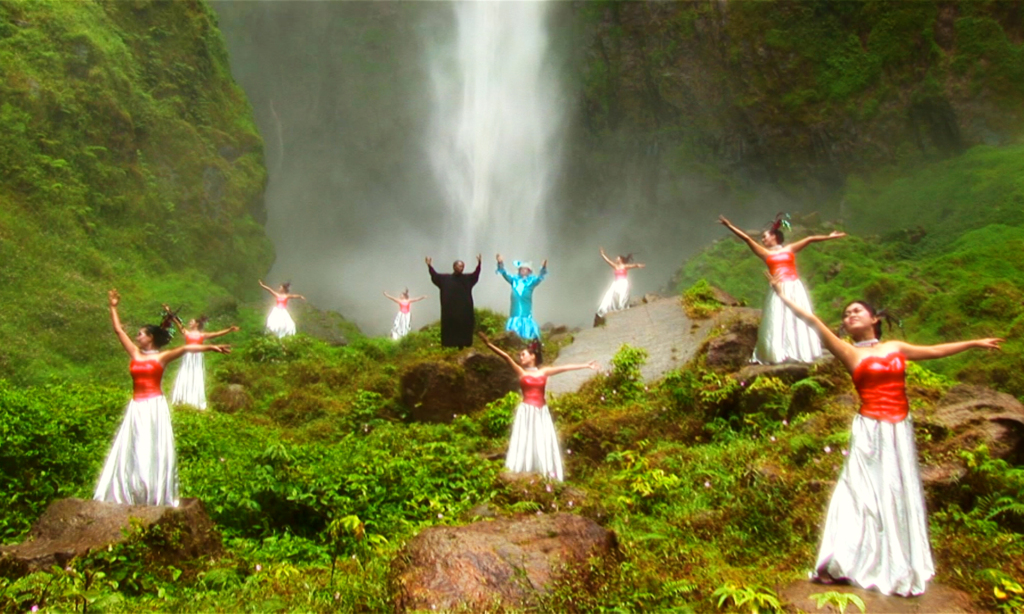
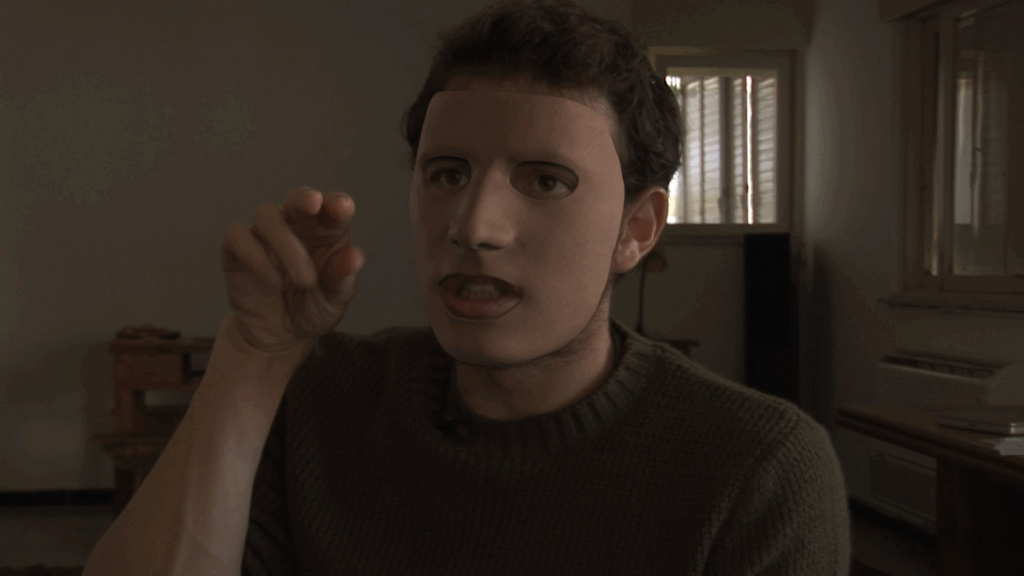
CT: Everyone who watches NAZA will have seen a different film. Because we cannot read emotion into the faces and the voices are distorted, it is hard for us to react in exactly the same way. I thought it was very intelligent how the filmmakers did this. You still see body movements, you still see gestures, and you hear something in how the witnesses speak that goes beyond something that you would find on paper.
I read trauma into it. I felt these were traumatized people. I wouldn’t have an explanation for their presence in the film if they weren’t, because none of them says they’re proud of what they’ve done, or that they regret what they’ve done either. The word regret does not appear at all. For what other reason would they take part in the film if not to make up for something, if not for the fact that there is trauma? Perhaps, if we talk about this relatively new genre of perpetrator cinema during ongoing perpetration, the defining urge could be to deal with lived trauma.
BR: Trauma is one of many possible reasons that people might have participated in the film. But people have other reasons, perhaps we could say fascist reasons, to talk about their violence. It feels good to talk about the violence you did. One of them described perpetration as fun, and there is pleasure in reliving it as testimony.
RS: I watched a clip on Middle East Eye in which Abraham is interviewed by Israeli Channel 12 Television. Abraham tells the reporter, “I can tell you that many of the soldiers I spoke with told me they were waiting for an opportunity to talk about this, waiting for a journalist to come to them.” It was easy for Abraham and Szor to get those 24 soldiers. They did not have to convince them.
MS: There have been a number of statements by Palestinians who were critical of even the fact that this film exists. Mosab Abu Toha and Kamal Aljafari both spoke of a general frustration that the West is embracing this Israeli self-inquisition at a time when Palestinians have been documenting the atrocities themselves for so long. We have to recognize what Rula Shahwan describes as the institutional hierarchy in the film world that lends more legitimacy to an Israeli film than to documentation and films from Palestinians.
“Abraham and Szor were not looking for recognition as filmmakers, but the imprimatur of a big film festival was a guarantee of visibility.”
BR: I can sympathize with this frustration, and I do think there is an important question about the limits of these cold, repetitive testimonies in terms of representing mass violence. At the same time, I ultimately find the claims that there is nothing new in the film unconvincing. Victims’ testimonies rarely can provide a totally comprehensive account of genocide — if ever. Take ghetto diaries from the Holocaust, for example. We don’t read them in order to access some complete knowledge of what was going on. Those prisoners didn’t know what was going on. They were in a sealed ghetto and could largely only know what the Nazis wanted them to know. They are essential to understanding all sorts of dimensions of what happened, but the idea that the victims’ points of view are sufficient for understanding any genocidal process is flawed.
Mahmoud Mushtaha wrote in +972 that the film exposed “what we couldn’t see.” I think that’s an important point, given the essential role of concealment in mass violence. It’s important to expose what the perpetrators know and what is kept concealed from the victims or the broader world — not to displace the victims’ viewpoints, but as a supplement to them — and to turn the camera’s gaze onto precisely who and what is hidden.
RS: I found the reaction from some of the Palestinian filmmakers disappointing. The Venice Film Festival was the first film festival to show the work of the Palestinian director Elia Suleiman. Kaouther Ben Hania’s The Voice of Hind Rajab received a 23-minute ovation at Venice the year before. Ahmed Hassouna’s Citizen Osama, a Palestinian film from Gaza, was selected for the same edition of the Venice Film Festival as NAZA and was received extremely well.
Abraham and Szor were not looking for recognition as filmmakers, but the imprimatur of a big film festival was a guarantee of visibility. In their interview with the Guardian, they say that their biggest fear was that no one would pay attention to the film. They took a wager to go to Venice and it helped them. When you see footage of the ovation, they look embarrassed: They’re not raising their hands, they’re not smiling. They don’t take it as a celebration of talent. Prestigious festivals are part of their strategy to promote the film, and let’s not mistake it for something else.
Moreover, Palestinians could not have made this film. Maybe 50 years from now, they could have interviewed the soldiers as septuagenarians or octogenarians. There you would have a completely different set of problematics.
CT: I think that the film will be seen 20 years from now as a milestone of documentary cinema. It does what documentary cinema does best: It documents if not the intention to commit a genocide, then at least awareness of it. That was certainly only possible in this setup, with Israeli directors who come from the same background as the people they interview.
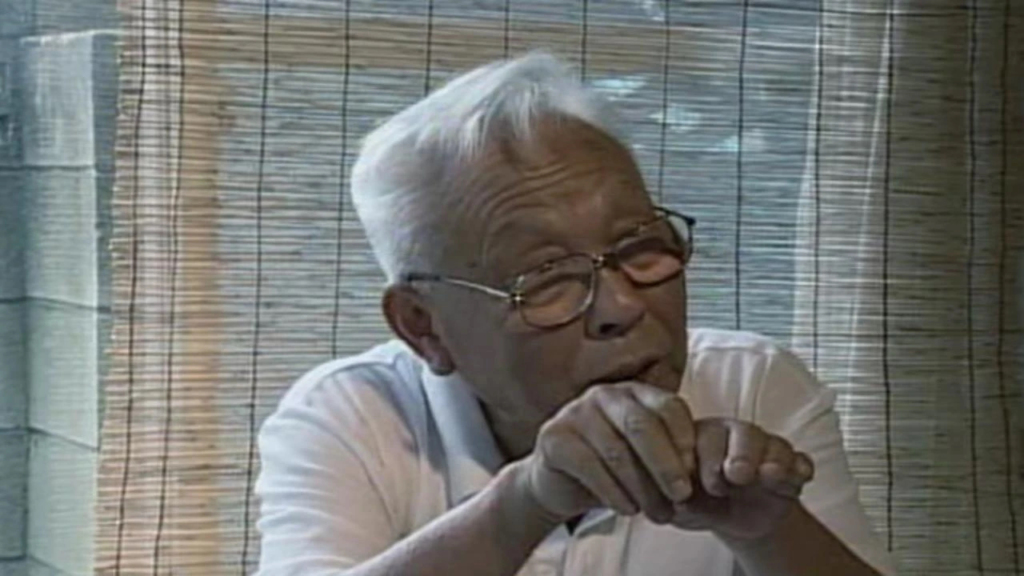
The film reminded me of a three-hour long Japanese documentary called Riben Guizi (2000), Chinese for “Japanese devils.” The film features interviews with Japanese soldiers who committed atrocities in the 1940s during Japan’s occupation of Manchuria, more than 50 years before they were interviewed. In their case, it took that long. The subjects don’t have to be made unrecognizable because they’re more than 80 years old. It’s the first time they are speaking about it, probably because they see death coming.
But the situation is similar: The film is only possible because someone speaks to them as another Japanese person, someone who was raised with the same values. And the way they talk about what they did is similar to the way the Israeli soldiers in NAZA talk. The soldiers are too close to the perpetration in NAZA, and in Riben Guizi, they still have not processed what they’ve done 50 years later. Let’s remember that the former Japanese Prime Minister Junichiro Koizumi used to go to the Yasukuni Shrine to pray to war criminals during his term.

To What End?
MS: One thing I wonder about perpetrator cinema is: to what end? Has perpetrator cinema ever led to justice for the victims? In what way can NAZA contribute to justice for the memories of the victims and to stop more people being murdered?
Of course, it’s important that we have this film with its testimonies because of the ongoing court cases against Israel for genocide and Germany for complicity. I recognize that fact or possibility. But at the same time, in moments of despair over the ineffectiveness of court decisions and the denial that obscures complicity, I wonder about the political efficacy of perpetrator cinema.
RS: Marc and Ben’s point about the analytic approach, the cog and the machine, both prove intent. It is essential in showing that the military’s intention is not to fight Hamas, not to eradicate a political group, but to exterminate the population of Gaza.
BR: The film also goes beyond demonstrating intent in its relation to genocide. I was struck by the home as the central unit of destruction. Revealing the tactical centrality of the destruction of homes to the genocidal process seems particular to this form of semi-automated and remote target selection. When the intelligence officers explain that it’s easier to find Hamas combatants in their homes, and so they target the home even though they admit there are plenty more non-combatants (civilians) there — that’s important and instructive for our understanding of how contemporary militaries enact mass, aerial violence. While aerial warfare is nothing new, this kind of strategic weaponization of the home itself is a different kind of mass annihilation from the model of mass execution sites, or camps, where victims are preemptively detained and concentrated.
“The film exposes how the calculation to save lives actually becomes the mechanism advancing mass violence.”
It’s also important to recognize how this violence unfolds within the discursive framework of international humanitarian law, which the very title of the film alludes to. The terminology of collateral damage refers to the so-called “incidental harm” permitted by international humanitarian law, and which in the film is revealed as an enabling factor in the genocidal violence. The film exposes how the calculation to save lives actually becomes the mechanism advancing mass violence.
MS: I feel compelled to point out that even to label Israel’s politics “fascist” is still shockingly scandalous in Germany. To discuss NAZA as perpetrator cinema will likely be scandalous in Germany too because in German political and media discourse, Israelis can only be permanent victims. This is of course ridiculous, implicitly antisemitic, and historically warped. It represents a refusal to confront the state of Israel’s contemporary genocidal politics and the political specificity of the colonial situation in Israel/Palestine today and instead treats Israelis as if they can be nothing other than the Jewish victims of the Nazis of yesteryear. But this thinking drives the whole construct of Täter-Opfer-Umkehr, the perpetrator victim reversal, that has become an operative concept in the anti-antisemitism discourse in Germany. It’s a typically German solipsistic worldview. In fact, some of the most significant work on perpetrator cinema has been done by Raya Morag, an Israeli scholar, who focuses on Israeli and Cambodian cinema.
The shots of the Tel Aviv cinematheque hosting a Lanzmann retrospective synch up with other references to the Holocaust in the film and, taken together, could facilitate a recognition of this genocide as part of a history of fascism. This is not to say that Israel’s genocide is the same thing as the Holocaust or that Israelis are the same as the Nazis. But the film makes a convincing case for the fact that some of what we have learned about how Nazi fascism worked can help us analyze the contemporary problem of how fascism functions in Israel, of which this genocide is one expression.
BR: I was also interested in how the film included shots of Holocaust Memorial Day, of the sirens and of people getting out of their cars. Not only do you see the obvious asymmetry between their grief in this national context and the violence confessed by the film’s subjects, but there’s a statement about this perpetrator-victim reversal. In Germany, this is treated as some kind of an accusation, but it is basic to a lot of genocidal violence. If you look at Rwanda or the former Yugoslavia, the violence was justified in many ways by memories of past victimization. Part of what the film reveals is how a society is educated into a victim identity that then enables tremendous violence, imagined as existentially defensive.
When the filmmakers show the screening of Shoah in Tel Aviv, they are not, I don’t think, making a comparison between genocides per se — or suggesting simplistically that it is victims of the Holocaust that have now become perpetrators — as much as they are showing the effect that this ritualistic annual process of watching Holocaust films, and publically, civically mourning the Holocaust, has on a society in terms of its own willingness to commit violence.
I recently listened to the Jewish Currents podcast with Josh Oppenheimer where he pointed out that The Act of Killing is distinct from NAZA because the former is really not about the killing itself but about the culture of impunity in Indonesia decades after the murders. But I was struck in NAZA by the sequence of footage depicting the establishment of Tel Aviv with the accompanying information that there is only one Palestinian home remaining from before the destruction. And then there is a title over a shot of that home today, and that title reads “Annihilation Zone.” Tel Aviv is the annihilation zone. That shot made me think that NAZA really is about the violence that has come out of Tel Aviv, the violence that comes from a culture of impunity after the Nakba, drawing a line of continuity from the Nakba to today.
CT: There is a counter-documentary called Naza: The Real Story. It is hastily made and extremely painful to watch. It mimics Abraham and Szor’s film without understanding it. The film puts its witnesses on a high-rise in Tel Aviv at night, but it doesn’t know why. It tries to portray the IDF as the most moral army in the world, claiming Hamas was constantly observing the Israelis, trying to find their weaknesses. Meanwhile, the Israelis tried to avoid any casualties. Ludicrous!
Naza: The Real Story reminded me very much of the film that the unfortunate Jewish director, Kurt Gerron, was forced to make for the Nazis called Theresienstadt. In it, Theresienstadt was portrayed as a model concentration camp, one in which the Jewish population was happy and had found a way to live together without disturbing non-Jewish Germans. It’s one of the most perfidious propaganda films in history. The main purpose is to show how humane the perpetrator is, how Jews, whom Nazi propaganda had portrayed as the enemy, as monsters, are treated with humanity and care. In Naza: The Real Story, the soldiers talk about how monstrous Hamas fighters are, using their own people as human shields, and how humane and moral the Israeli army is in its operation of “taming the monster” in Gaza.
“The human shield argument used against Hamas is obviously a smokescreen to distract us from the fact that the IDF choose intentionally to murder Gazans at home.”
MS: NAZA, Abraham and Szor’s film — not the propaganda you’re describing, Christoph — includes a shot of the headquarters of the IDF which sits in the middle of Tel Aviv. This draws out the absurdity of the human shield argument because any attempt to bomb the military headquarters in Tel Aviv, a legitimate military target, would likely not result in the claim that Israel uses Tel Aviv as a human shield. But if we follow the illogic Israel uses against Hamas, we would have to say that. Indeed, as Ben points out, the officers in the film make clear that they target potential Hamas fighters in their homes because it’s easier to kill them that way. The human shield argument used against Hamas is obviously a smokescreen to distract us from the fact that the IDF choose intentionally to murder Gazans at home, not because Hamas stockpiles weapons in living rooms or because they hide behind civilians. They do it because AI technology makes it easy and possible. For them, the thousands of murdered Gazan children and family members are simply naza.
The Myth of the Moral Army
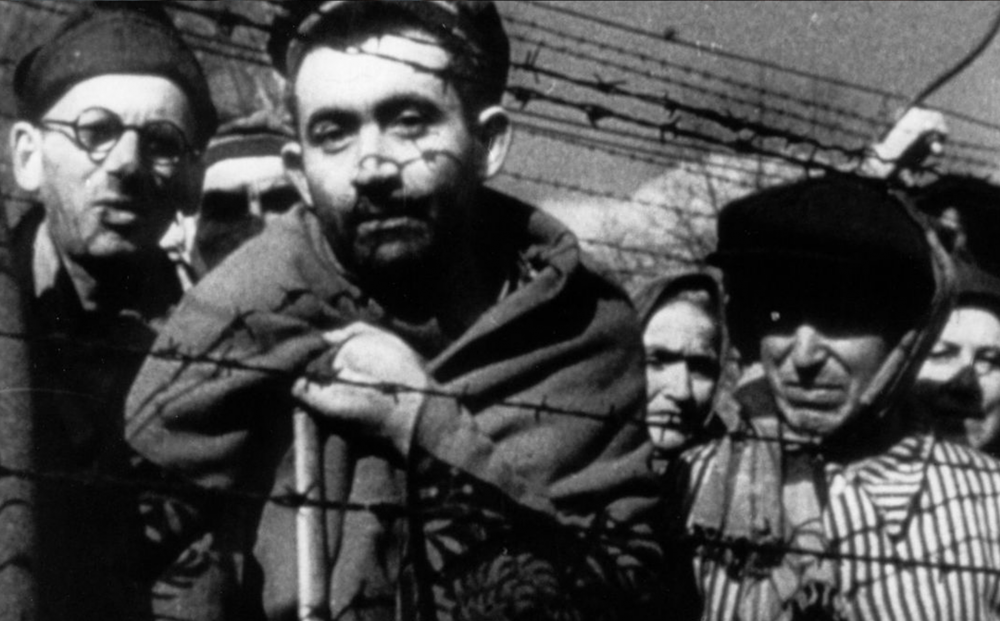
RS: I would like to ask Christoph: When was the first time you saw images of the Holocaust? At what age?
CT: I must have been 12 or 13 when I saw Night and Fog (1956) by Alain Resnais. I think one of our school teachers organized the screening in the local cinema.
There is an interesting film made about the liberation of the concentration camps, German Concentration Camps Factual Survey (1945). Alfred Hitchcock was commissioned to make a documentary from footage by the Allied Forces that was meant to be shown to Germans after the war to educate them about what they had done. But the film was quickly withdrawn because West Germany became an ally in the fight against communism. They didn’t want to traumatize the Germans by showing it to them. The unwillingness to submit the perpetrators to images of the horrors they inflicted was insane.
BR: That makes me think of the exhibition of Wehrmacht photographs in the 1990s, which was not exactly well received either. Similarly, I’m pessimistic about what this film will do in Israeli society because I think it will provoke an enormous amount of denial. How could it not?
CT: In Germany, there was the myth that the SS had committed all the crimes, and the Wehrmacht had been the good guys just following orders — a moral army, almost. That this exhibition tried to shatter that myth was the reason it was rejected by many Germans.
MS: So couldn’t we understand the final sequence of NAZA as an attempt to force the perpetrators to see the destruction of the victims’ lives that they have caused? As far as I know, few images of the genocide from the perspective of Palestinians were readily available in Israel.
“The film does not encourage identification with the perpetrator directly, but more broadly with the society surrounding and engulfing him.”
BR: To return to the setting on the roofs in Tel Aviv with life in the many apartments, the film shows how people do go on, and thus how the violence is normalized. The historian Doris Bergen has suggested that genocide is not something that strictly happens in the battlefield but rather becomes a family and a community affair, often through the circulation of trophy images from the field or through confessional sharing, as in the film. It’s precisely the way that the soldiers are accepted back home after committing and sharing such crimes that teaches them that they’re not a perpetrator, that they’re not evil, that they can continue to do this and they won’t be rejected by their loved ones or society.
The contrast between the silhouettes of the intelligence officers and the exposed face of Abraham or the exposure of the surrounding apartments creates an interesting structure of identification: The film does not encourage identification with the perpetrator directly, but more broadly with the society surrounding and engulfing him. And so the film is perhaps less about the perpetrators themselves than it is about making proximity to or complicity with perpetrators imaginable.
RS: As a Palestinian, one of the questions that comes to mind is: How do these people come back from this? What will happen to Israeli society? How do they project a future? Maybe the answer for the moment is that they are marching towards some sort of collective suicide, sustaining this state of permanent war. I don’t know.
In the First 54 Years, I remember a 30-something-year-old man talking about the violence he enacted manning a checkpoint. Behind him was a portrait of Che Guevara, a guitar, books on a shelf. I was curious to decipher the titles to see how much he and I might have shared readings. I had a picture of Che Guevara at one point. The dude was a lefty. He liked music. He carries what he has done for the rest of his life, but he also seems to have moved past it.
In a way, the question also extends to Europe. Israel is a European creation. What will they do with Israel’s moral collapse? It’s also Europe’s moral collapse because it’s their creation.
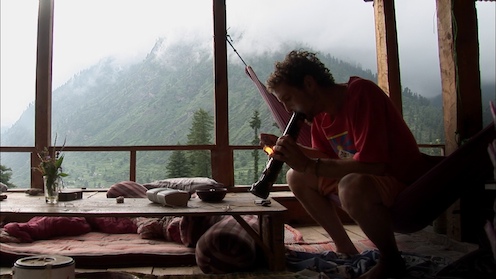
MS: I think back to Yoav Shamir’s Flipping Out (2008), which was about the connection between Israel and Goa. The state had an arrangement so that IDF soldiers could travel to Goa after their military service, and they received psychological help, and drugs to chill out, space out, hallucinate, process or try to forget their perpetrator trauma, if you will. I don’t know if Israel can drug its whole society as a way of moving forward.
CT: I would also love to see a film that gets into the heads of those who committed the massacre three years ago, but there are many reasons why this film will never happen. Not the least of which is that they are probably all dead now. But trying to understand the mind of killers is one of the biggest challenges of fiction cinema, and why shouldn’t it also be a challenge for documentary cinema?
RS: There is the risk of Palestinians being locked in a victim identity. That’s my biggest fear, and part of why I think it is incumbent on the victim to always be more intelligent and more creative.
I hope a film like NAZA will bring forth similar films from Myanmar and Sudan, and from the United Arab Emirates, Saudi Arabia, and other perpetrator societies. We need more of this material. But it should never be confused with, compared with, or replaced by films made by the victims.