Is Hope in the Room With Us Right Now?
A rumor of hopelessness is circulating — in newsrooms, cultural institutions, op-eds, and podcasts, in the professional idioms of those who long believed themselves capable of explaining the world. It carries a tone of surprise, of belated awakening, of ground suddenly lost. The world, it seems, no longer behaves as expected. The rule-based order, the grammar of liberal democracy, and the shared narrative of progress and regulated violence — nurtured by both liberal and right-wing Western journalism, rooted in varying degrees of supremacist thinking — are beginning to tear. What is striking is not the scale of the doom, but the position from which it is now being perceived.
But let’s begin somewhere else:
The German-Swedish writer Peter Weiss spent almost a decade working on The Aesthetics of Resistance, his monumental trilogy about communist resistance to National Socialism and its accomplices. He knew how the story ended. He knew the executions, the betrayals, the continuities. He knew that fascism did not simply collapse in 1945 but survived: reorganized in institutions, in capital, in language. And yet, he wrote.
Invoking Weiss is not a historical excursus but a measure held up to the present. For what today registers as shock — as if order had only now begun to reveal its own rules — was for Weiss already evident: the continuation of violence in administered form, its translation into routines, jurisdictions, constraints, into a language that presents the exceptional as normal, the lethal as necessary, injustice as order.
What is new is not that this order is brutal — it always was. What is new is that its brutality has become exposed at the center rather than confined to the margins. This allows us to read the present as the imperial choc en retour Aimé Césaire described: colonial violence returning home, now reorganized as interior politics.
The concept of hope has fared, at least since the Obama campaign of 2008, much like the concept of freedom. Both have been hollowed out by neoliberalism and are mostly read ahistorically — detached from struggles against oppression and from the possibility of another future to which they might refer. Semantically, they resemble a society-wide anti-AfD demonstration whose harmlessness to the center of power is evident in the absence of police, while pro-Palestinian protests are violently suppressed week after week. All of this rests on the ahistoric assumption that fundamental change can be achieved and sustained by democratic majorities.
What is collapsing here is not merely a geopolitical constellation, but the credibility and inevitability of an entire realism: the narrative frame that for decades presented the present as without alternative — as order, as security, as necessity.
The liberal fiction of universality — human rights, international law, democratic accountability — is cracking at its core. The Canadian prime minister’s recent remarks in Davos make this plain: “[…] we knew that international law applied with varying rigor depending on the identity of the accused or the victim. This fiction was useful […].”
What was once a danger only for others — hardened borders, criminalized dissent, arbitrary power, the irrelevance of truth — has entered the horizon of those who long believed themselves protected from it. The same voices now lamenting the collapse of norms were largely silent while those norms rested on the systematic suspension of rights for non-white, non-European, non-bourgeois bodies.
What is collapsing here is not merely a geopolitical constellation, but the credibility and inevitability of an entire realism: the narrative frame that for decades presented the present as without alternative — as order, as security, as necessity. Mark Fisher called this condition “capitalist realism”: the inability to imagine any transformation outside the current capitalist system, popularized in the sentence borrowed from Fredric Jameson that it is easier to imagine the end of the world than the end of capitalism.
Fisher laid out his theory in the aftermath of the financial collapse that tore a hole into the fabric of the liberal-democratic capitalist world order that until then had conceptualized itself as the end of history, the system that superseded all other systems. But even after 2008, this realism did not shatter; it congealed. It once more integrated critique, aestheticized dissent, normalized the management of permanent crisis. It showed once more that capitalism, more than any other ideology, is a system that doesn’t need the people’s support, only the complicity of those who uphold the status quo. Which brings us to the responsibility of writers, journalists, anyone involved in stabilizing the system by means of soft power.
Because realism depends on continuity — on the sense that the present, however brutal, remains intelligible within a stable horizon. It is precisely this horizon that is now wavering. A diffuse (class) consciousness is spreading: the feeling that “something is wrong.” Not only because of the transparency of the objectives of those in power, but because the architecture of power itself is shifting.
The crisis, therefore, is also a crisis of narration: of the truths it can carry, and of the legal and political consequences that any revealed truth must demand.
Increasingly, voices argue that capitalism itself is being replaced: by a form of techno-feudalism, techno-fascist top-down revolution (not the proletarian one that was hoped for) in which platforms become lords, access replaces property, and sovereignty is exercised through enclosures, data, logistics, and dependencies. Whether the term techno-feudalism will endure matters less than what it signals: when the mode of production and domination transforms, the locus of power shifts, and with it the object of critique.
Precisely for this reason, the responsibility of those who work with words becomes unavoidable. For while imperial violence is clearly not new, what is new is that imperial powers no longer feel the need to disguise it as a realism that conceals its structures. This shift signals a broader change in paradigm. The crisis, therefore, is also a crisis of narration: of the truths it can carry, and of the legal and political consequences that any revealed truth must demand.
What is at stake, then, is not only how power acts, but how resistance becomes visible — a problem that lies at the center of Peter Weiss’s work. As Weiss would insist, the question is not only what is resisted, but how resistance can be made legible in history.
In this sense, the shift Weiss enacted in his work was decisive. He had originally conceived The Aesthetics of Resistance as a series of portraits: individuals, their tactics, their lives. But at some point, the emphasis moved. No longer resistance itself, but its aesthetics entered the title. Aesthetics here does not mean style or spectacle, but the conditions under which resistance can be perceived, remembered, transmitted: the role of words, of the arts, of literature. Perhaps also their return to a function beyond spectacle and service to those who benefit from the status quo.
Weiss wrote belatedly. He had not been part of the resistance. As a young man he fled Germany with his family and experienced the war from exile. The “I” of his novel does not speak from the battlefield but from the echo. It is hesitant, unheroic, marked by delay. But it knows that silence would be worse. Literary work becomes a form of duty. Weiss knew that literature cannot undo the past or resurrect the dead. But it can preserve what power wants forgotten: its motives, the memory of betrayal, the traces of resistance. His belatedness did not excuse him. It sharpened the task.
The Aesthetics of Resistance speaks of a country that never became reality — of an anti-authoritarian, anti-fascist Germany that was prevented from emerging in the East as well as the West. In the West, Weiss was too communist; in the East, too anti-Stalinist. The question he leaves is not nostalgic but open: What was to become of this country, which had already been robbed of almost all the people who could have given it a new face?
Weiss’s novel, read as a handbook, reminds us that even in what feels like the worst of all possible worlds, other futures are interwoven within the present. Those who have access to means of cultural production bear responsibility: to trace these futures, to strengthen them, to carry them into the next struggle. Aesthetic opposition must move beyond symbolic protest toward building durable counter-structures capable of materially resisting authoritarian reorganization.
And even if it were not to turn out as we had hoped, this would change nothing about the hopes themselves. The “we” in Weiss is never neutral or majoritarian. It is a collective formed through refusal — against fascism, imperialism, and capitalism — and grounded in a shared project rather than origin or identity. This “we” is not given; it must be built through solidarity, imagination, and contradiction. To carry it into the present means to expand it.
Weiss’s blind spots are real: migrant labor, Afro-German resistance, and the links between European left movements and global decolonial struggles. His inherited internationalism did not fully grasp how class is lived through race, gender, and geography. Today, real solidarity must confront racialized capitalism, settler colonialism, ecological destruction, and planetary displacement — and center the perspectives of Indigenous and racialized people who have long fought these forces.
For instance, an abolitionist antifascism rooted in Black liberation doesn’t focus solely on combating right-wing movements but on transforming the social and institutional conditions within liberal democracies that produce fascistic power to begin with — including imperialism, racial capitalism, and state violence. It advocates for international solidarity grounded in anti-colonial and anti-racist struggle.
In her recent article Schwarze Kritik des Faschismus, Vanessa E. Thompson emphasizes that a Black critique of fascism “contribute[s] to an understanding of fascization that views it not as opposed to liberal democracy, but as embedded in liberal-democratic rationalities.”
Hope, here, is not salvation but a refusal — a refusal to mistake structure for fate, domination for conspiracy, or what exists for what must exist.
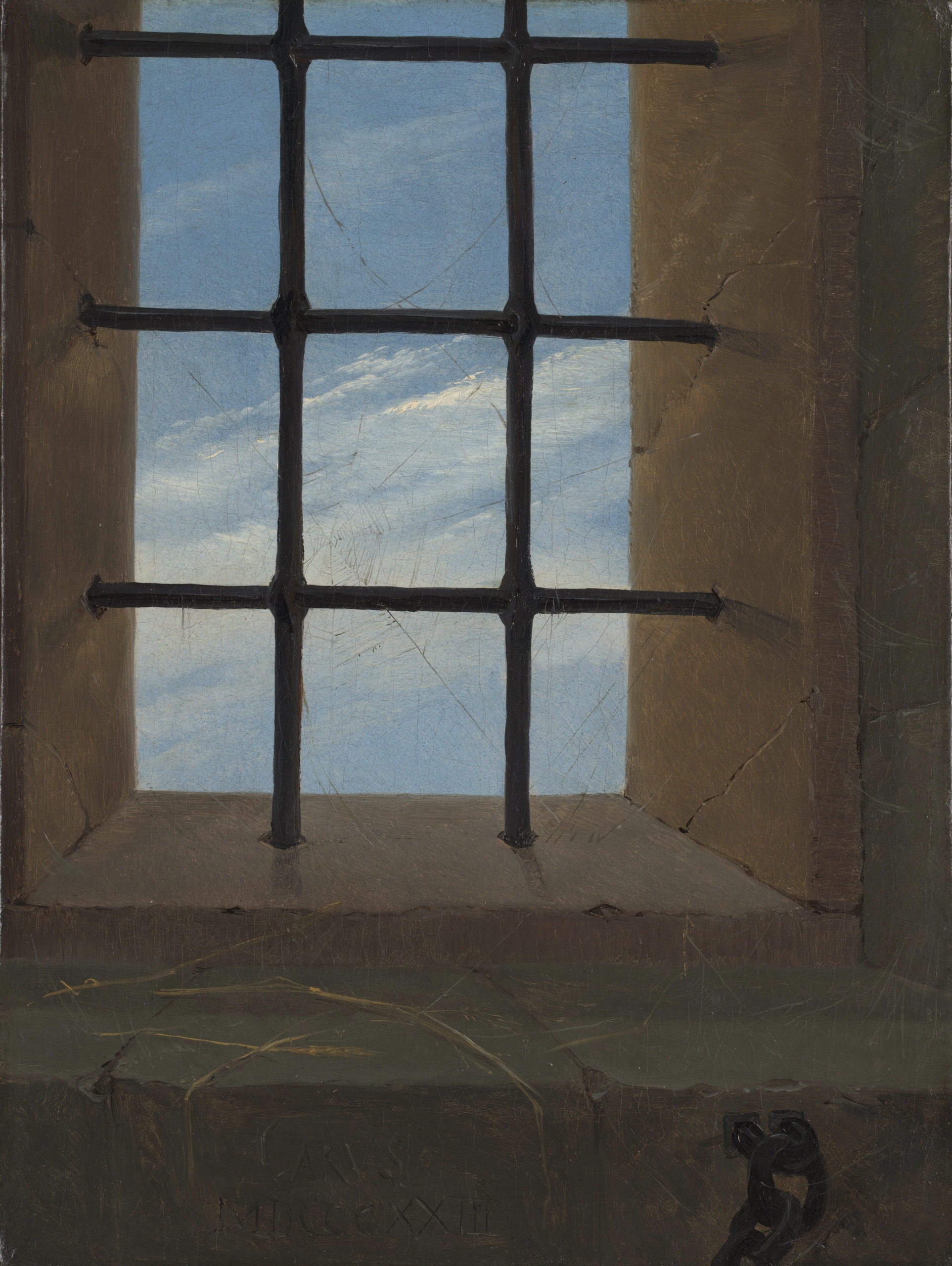
Following The Aesthetics of Resistance, Weiss’s final play, The New Trial, turns to Kafka. In the condemned man’s room, a hatch set high in the wall reveals the noise of a trial that never ceases; a power that relentlessly continues, regardless of the efforts of the person living in that room.
The New Trial shows that power is not fate or hidden intention, but rather structure, routine, and the banality of normality. A kind of realism whose inner workings are difficult to trace, but which becomes audible everywhere once one has learned to listen. Weiss’s final shift replaces myth with knowledge: there is no way out, but there is an end to enchantment.
Hope, here, is not salvation but a refusal — a refusal to mistake structure for fate, domination for conspiracy, or what exists for what must exist. The hatch opens not a space, but an orientation.
Seen from here, hope is no longer a feeling in the room but a fragile capacity: to hold onto the knowledge that the world as it appears is not the only one ever imagined. That knowledge lives in Rojava’s democracy, in Palestinian resistance, in anti-fascist, anti-capitalist struggles, in left unions and every indigenous collective that fights against the odds. It is the knowledge that other futures existed — and were defeated — and that their defeat does not annul their necessity.
Walter Benjamin writes: only for the sake of the hopeless is hope given to us. Hope is not consolation. It is fidelity to unfinished struggles. It is the refusal to grant defeat the last word. It is not optimism, but obligation.
Not because victory is likely, but because the loss of hope as utopian imagination and orientation would be unbearable. And maybe there’s no better time to live up to that task but while the fabric of capitalist realism is being torn and a new order arises that still seems permutable and fragile.
Peter Weiss continues: And even if it were not to turn out as we had hoped, this would change nothing about the hopes themselves. The hopes would remain. Utopia would be necessary. Later on, too, hopes would flare up countless times, be smothered by the superior enemy, and be awakened again.
He does not ask us to believe in hope. He asks us to act as if the future were still open — not because it is guaranteed, but because to live otherwise would mean accepting the room as final, and thereby making it unbearable.
Hope is no exit.
It is the refusal to confuse enclosure with eternity.