The Burden of Proof Lies with My Memory
Translated by Schayan Riaz
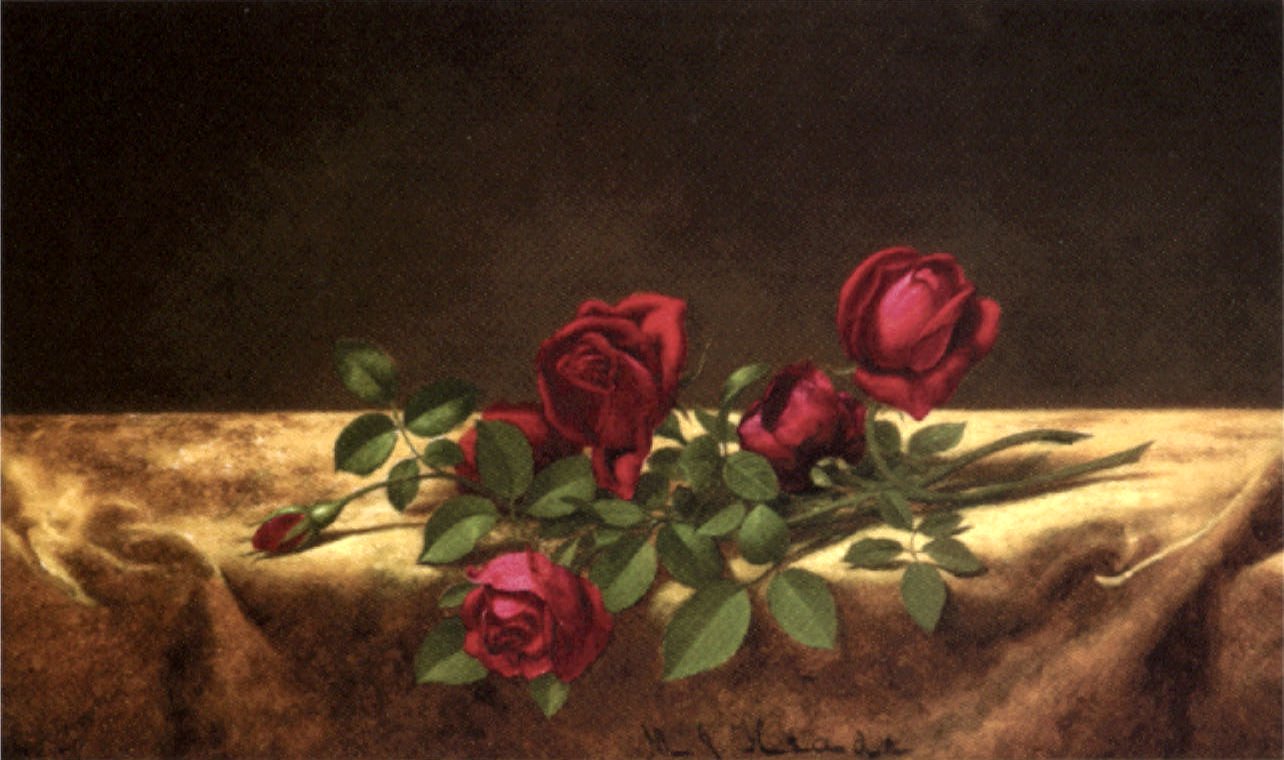
It is already evening when my mother holds a black picture frame on her lap, a single red rose beside her. A head with hair just as red looks out from the photograph. My mother takes the rose, places it tentatively along the edge of the frame, then lifts it away again. She sets it on another side. Again and again, she moves it, turns it slightly, pauses, looks at the picture from a distance, then draws the rose back toward herself. Something isn’t right. The shades of red seem to clash. Finally, the rose has made its way all around the picture — except for the upper right corner. There, a black strip is attached, forming a small triangle with the sides of the frame.
The photo shows my father’s best friend. They share the same name: Halil. It is April 1999. For weeks, the NATO intervention in Kosova has been underway. During the day, politicians argue on television about the mission, about strategies and mandates, while in Shkozë e Molliqit, a life is coming to an end. At the beginning of the month, Halil left Germany to join the Kosova Liberation Army. He does not yet know that only eleven days will lie between his departure and his death. He will become one of more than 10,000 people killed during the war in Kosova.
I do not know Halil from my own memory. I know him only from video recordings in which he holds me as a baby in his arms. I do not remember the pressure of his embrace. I know his stories, and I know the date of his birthday. I know the final paths of his life, I know his name and the names and dates of many people who will never know me. I know them only because the people to whom they belonged no longer exist. And I know Kosova, even if for a long time it was only a feeling for me — one that fills this living room in Augsburg-Oberhausen in 1999.
I carried an entire country made of stories, smells, and the memories of other people with me, while outside it was often no more than a word mispronounced.
I know of Kosova’s existence, even though its letters are missing from many maps and years will pass before I set foot there myself for the first time. I grew up with the feeling that Kosova is not something that simply exists, just as freedom is not something that simply endures. The feeling of Kosova in this living room is a legacy of the generations before me, my father said. A practice we must continue, he would add. Even if for me that would mean nothing more than tracing the lines in schoolbooks with a blue ballpoint pen, in the place where Kosova’s borders should actually be.
Outside this living room, Kosova was something else for a long time. Not a feeling, but a question. Sometimes an argument, often an absence. At school, it appeared at most on the margins — as a footnote in the atlas, as a name stumbled over in German news reports no one followed for long. While for us names had faces, for others they remained numbers. And while for us there was a missing country, for others there was only a missing topic. I carried an entire country made of stories, smells, and the memories of other people with me, while outside it was often no more than a word mispronounced. I did not understand how these opposites could fit into the same reality. But perhaps it was precisely this absence that taught me to pay attention to what is missing from many people’s field of vision.
Our truths do not prevail simply because they are true.
Because it was never only about an entry in a geography atlas or a history lesson, but about the taken-for-granted nature of our existence. I learned early on that it is not enough to have lived our history. Our truths do not prevail simply because they are true. So we name our pain, lay it bare. We explain where we are and why we are here today. The war, the flight. How long we have been independent. Who recognizes us. Who does not. We weigh ourselves down with the sentences we speak when we speak about ourselves, as if we first had to make our existence plausible before it can simply count.
Eighteen years after independence, I still type the question “How many states recognize Kosova?” into the search engine. I keep checking whether the number has increased, as if I had to keep confirming its validity to myself. 121. Most recently recognized by the Bahamas. One more than last time. For a moment, I am happy. And yet in the same breath, I think of the other number — the one for whom Kosova does not count, even though it votes and governs. Even though it lives.
Kosova’s existence remains tied to this number. It moves within this logic, between recognition and rejection, recorded in lists, examined in resolutions, confirmed, postponed, blocked by the veto power of powerful states and their political interests. Before the eyes of the world, Kosova’s beginning is bound to recognition. A beginning subject to revocation.
And yet, for me, Kosova begins with a face. With a picture frame on my mother’s lap, the rose without a place, the colors that clash. Halil. My first memory of the world is this paper on which his red hair was printed — a story worth telling. Between what is reality for me and what must first be recognized elsewhere lies a distance I cannot measure or understand. In this distance, I learned to count. I learned to bear the burden of proof of our existence and to explain things that should never have needed explanation.