East Prussia is Dead
Often, in the vault of a family’s untold stories are the most important things.
– Kei Miller, The Old Black Woman Who Sat in the Corner
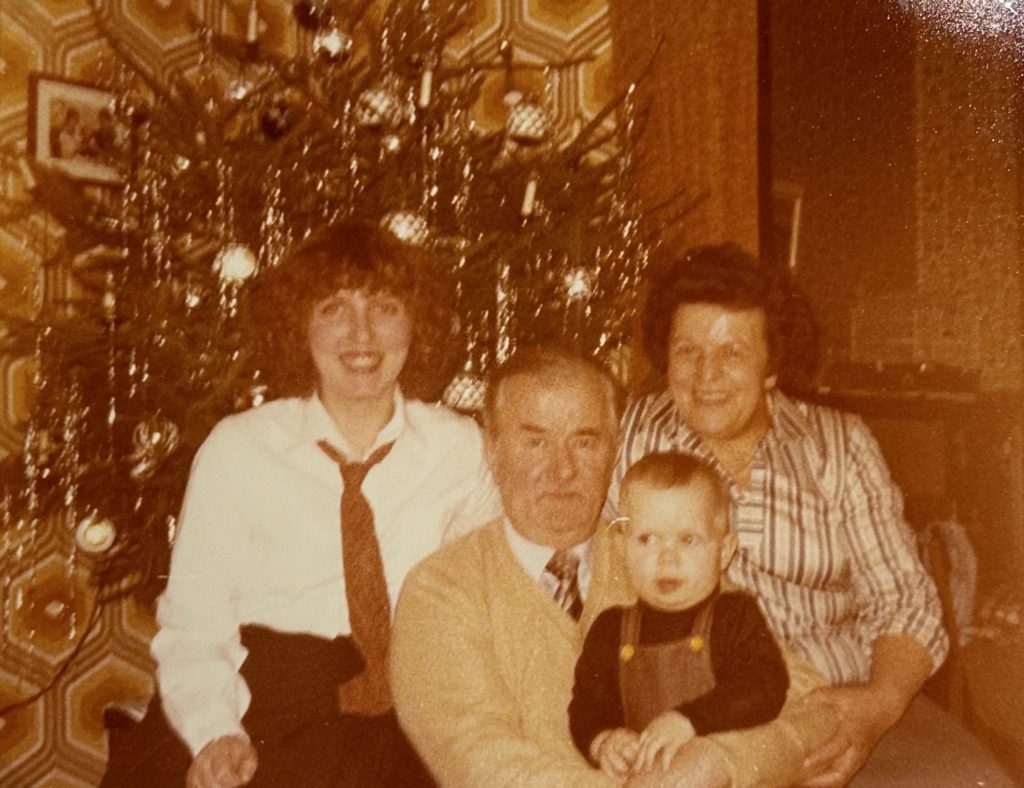
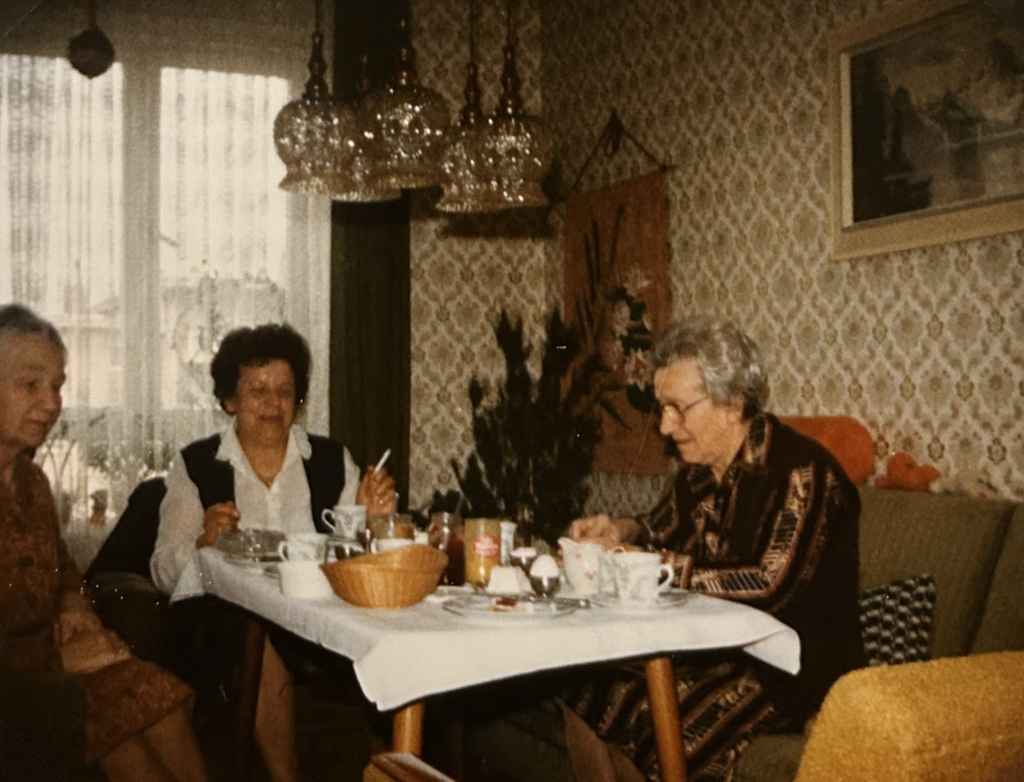
My grandmother Cäcilie, who was born in 1923 and whom we called Cilly for short, was a short, rotund woman full of energy and with a roaring, infectious laugh; a woman always active, planning, scheming, in motion. She spoke a smattering of languages: German, Polish, the Warmian dialect, and Russian. The first three she brought with her from her home, a wealthy estate by a lake in the village of Lengainen in the rolling hills of Warmia, a rural Catholic region of Poles and Germans in the province of East Prussia. Russian she learned during four years as a forced laborer in the Ural Mountains of the Soviet Union, where she was deported in January 1945 by the Red Army. With me, her language was always German, however. My brothers and I only heard snippets of the others when she was angry; Polish was reserved for visits from her sisters.
Her partner Willi — Cilly and Willi, I am not making this up — was the quiet one. He was born in 1912 on a farm amidst the sandy fields of Protestant Pomerania on the Baltic coast, where his tenant farmer parents and their eight children shared two rooms in a wooden cottage with no electricity. He served as a sapper in the Wehrmacht from 1939 on, was wounded twice during the invasion of the Soviet Union and taken prisoner by French forces in early 1945. Like his partner, he spent a few years as a forced laborer, albeit in the south of France. But he did not seem to have picked up any French there: he only spoke German, and with his siblings the German dialect of his village Zewellin.
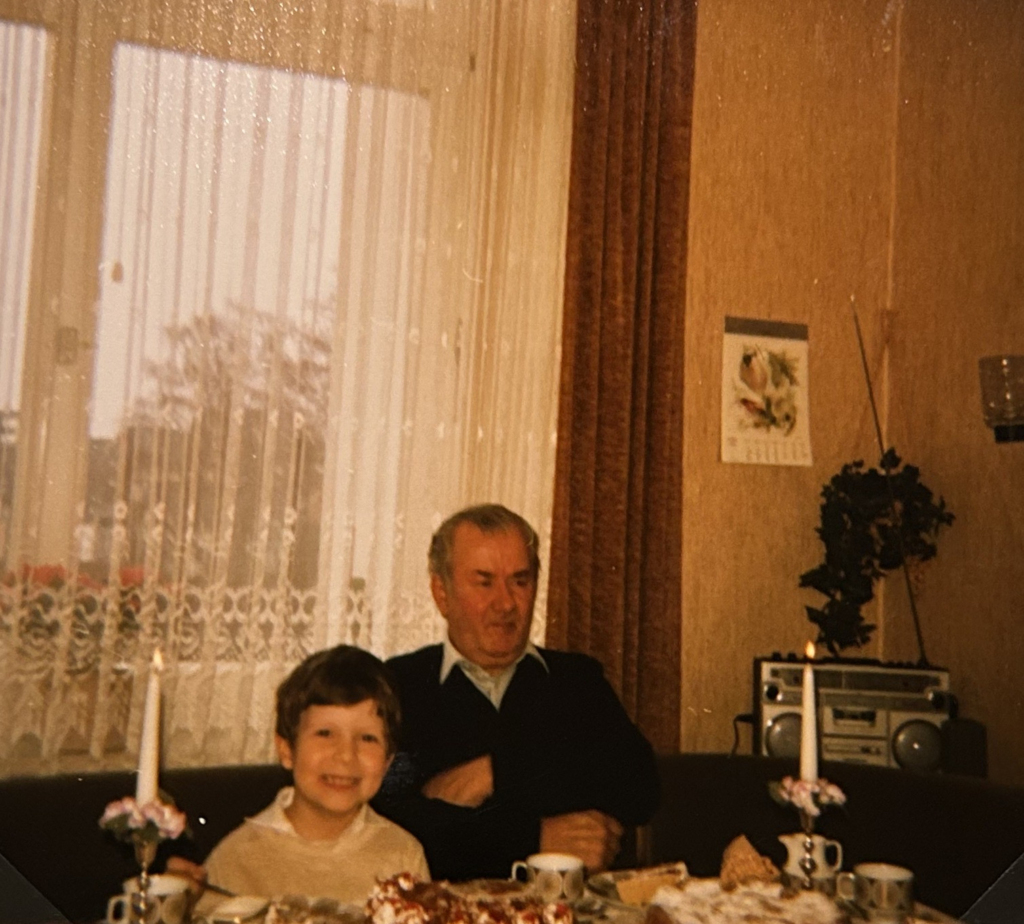
His silence seemed to suit him, as if he had said everything there was to say in life many years before we were born and was now content to sit there in his green armchair, watching others talk.
Cilly told my brothers and me stories about her life and her home, stories of sleigh rides to church, summer dips in the lake, wolves in the woods, visits to the big city. These were fascinating and wonderful tales about a home far away which she told with the melancholy of homesickness, but which I lapped up eagerly nonetheless. Maybe that was because we had no family narrative to anchor us where we lived. My grandparents were the first of my family to arrive in my hometown; all of our family lore before their arrival took place elsewhere in Europe. My father had stories about an adventurous childhood amidst the war rubble that dominated West German cityscapes until the 1960s, but my own coming of age in the gentle hills of Solingen and the Bergisches Land was always underlaid with stories from the gentle hills of Warmia. That narrative was one-sided, too, in many aspects: Cilly told me only the beautiful and positive stories, and Willi remained silent completely. His silence seemed to suit him, as if he had said everything there was to say in life many years before we were born and was now content to sit there in his green armchair, watching others talk.
Despite their differences, the story of my grandparents is exemplary of many of the displaced in Europe following the end of World War II. They met in a place far away from their respective homes, in Solingen in West Germany. When I was born in 1977, Lengainen and Zewellin had become Łęgajny and Cewlino in the People’s Republic of Poland, behind the Iron Curtain, unreachable for Cilly and Willi, and inhabited by new people.
The reason that my grandparents first met in West Germany was that parts of their families had fled there, either from the advancing Red Army or the territorial shifts that followed the defeat of Nazi Germany. The post-war order for Europe decided upon by the UK, USA, and the Soviet Union required border changes and population shifts, out of the belief that “pure” nation states without minorities would contribute to a more peaceful future. Winston Churchill said in a speech in the House of Commons in December 1944: “For expulsion is the method which, so far as we have been able to see, will be the most satisfactory and lasting. There will be no mixture of populations to cause endless trouble, as has been the case in Alsace-Lorraine. A clean sweep will be made.”
Their houses and household possessions were left for the new arrivals: the areas were repopulated in turn with Poles who themselves had been forcibly expelled.
During the Yalta and Potsdam Conferences in 1945, Stalin and the western Allies agreed that Poland would be given former German territories, the southern half of the province of East Prussia and the provinces of Pomerania and Silesia. The German population was forcibly expelled. Those who had not fled the advancing Red Army in 1945 were ordered by the new Soviet and Polish authorities to leave for West Germany or the GDR. Their houses and household possessions were left for the new arrivals: the areas were repopulated in turn with Poles who themselves had been forcibly expelled from the Kresy regions in the east, which were divided between the Ukrainian, Belarusian, and Lithuanian Soviet Republics and settled by Lithuanians and Ukrainians. Other Germans were pushed out of Czechoslovakia, Hungary, Romania, and Yugoslavia; in sum, around 14 million German refugees arrived in the Western and Soviet zones of occupation in West Germany and the GDR after 1945, and around 6 million people from all over prewar Poland moved to the so-called “recovered territories.” How many people died during these massive forced population movements remains unclear to this day. Estimates vary between 400,000 and up to two million.
By 1961, one in five West Germans was a refugee or displaced person. The official narrative of West Germany is that integration was a smooth process, but that has been refuted in recent years, for example in the aptly named book Kalte Heimat (Cold Homeland, 2008) by historian Andreas Kossert. The newcomers encountered a wall of rejection and racial prejudice amplified by 12 years of National Socialism. They were insulted as “gypsy scum” or “Pollacks,” and a popular carnival song in Cologne in the 1950s had the chorus: “Am dreißigsten Mai geht ein Flüchtlingstransport — wir lachen uns kaputt, dann sind se fott” (On May 30, a refugee transport is leaving — we’re laughing our heads off, and they’re gone). Unhappy with an invoice presented by a refugee working as a truck driver in 1949, estate owner and national economist Dr. Wilhelm Weil from southern Hesse stated that “All refugees belong into the box in Auschwitz!” He was sued and had to pay 1000 Deutschmarks as fine. My grandparents never mentioned any similar experiences, but one of Cilly’s cousins — who lived in a refugee camp in Kaiserslautern for years — told me how her father was called a “Pollack” by all his West German colleagues, even though he saw himself as a proud German patriot.
Integration was often accomplished only with police assistance. District office workers, protected by police, went through the villages and towns to search for available rooms for the newcomers. Other refugees lived in Nissen huts in refugee camps for years. Two-thirds of the displaced persons changed their line of work after 1945, and among farmers like my grandparents the figure was as high as 87 percent. Willi, who had left school with 14, found employment as an unskilled worker in the cutlery industry in Solingen for the rest of his working life, and Cilly worked in retail.
In the GDR, the expellees did not officially exist. Like the Polish expellees, displaced persons in the Soviet Zone had been officially referred to as “resettlers” by the Soviet Military Administration; the GDR government spoke of “new citizens.” Public remembrance of the lost homes was prohibited, and only possible after 1989.
In West Germany, however, some made their pain public. The state-funded Federation of Expellees (Bund der Vertriebenen, or the BdV) was formed in 1957 and still exists today, an umbrella organization for the expellee associations in the German federal states and 20 so-called “Homeland Associations” (Landsmannschaften), which represent individual areas of the former German provinces.
While these organizations claimed to represent all 14 million displaced persons, only a fraction were active in them. By 1965, around one percent of displaced persons belonged to a regional association. What the BdV and other associations managed was to be well-connected, especially with the conservative CDU/CSU parties — and to have a loud media presence. The expellee associations organized research, held cultural gatherings, issued publications and books and had their own newspapers — the far-right Preußische Allgemeine Zeitung for example is published by the Landsmannschaft Ostpreußen since 1950. The list of officials of the BdV until the mid-1960s also contains many former Nazi officials such as Alfred Gille, Erich Schellhaus, or Karl Stumpp.
In Solingen there is Schloss Burg, a reconstructed medieval castle towering high over the banks of the Wupper River which I often visited with Cilly and Willi as a child. I was eager to see the old armor and swords on display, and the paintings showing medieval courts, duels, and battles. But there was also a tower that I sometimes went into: in the center was a strange group of statues depicting a family, surrounded by coats of arms and flags on the walls. I only went alone as Cilly and Willi never wanted to come along. Now I know it as one of the many memorials to the “lost east” created across West Germany in the 1950s and 1960s, the one in the tower the central memorial site for displaced persons in North Rhine-Westphalia opened in 1951.
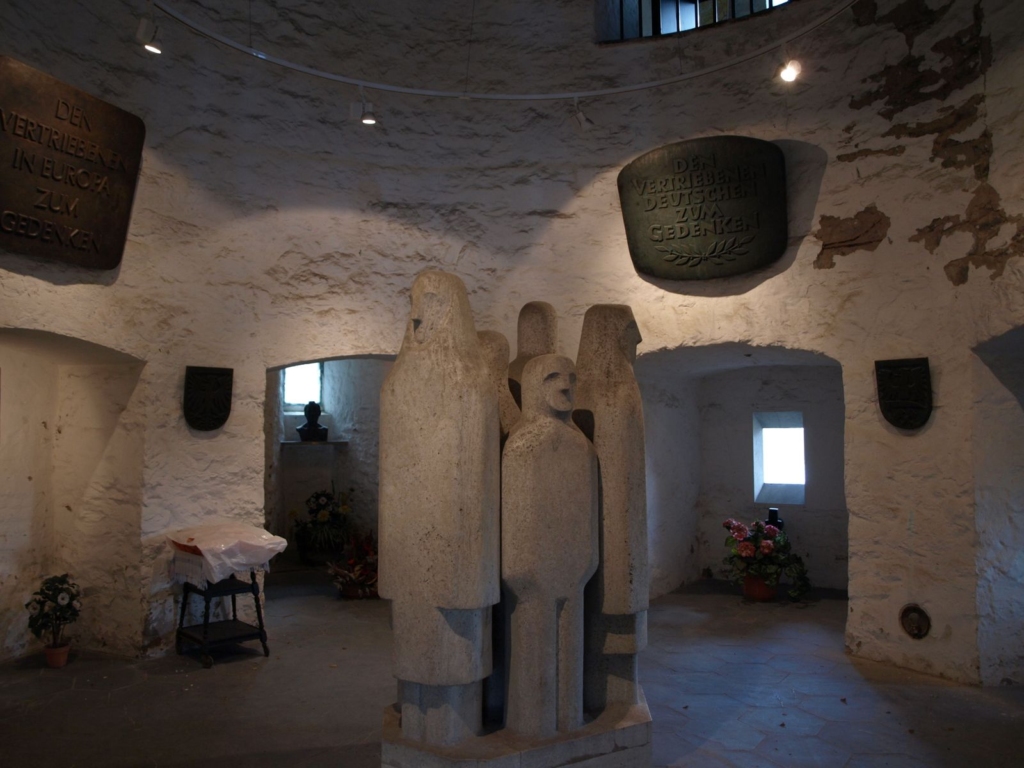
Besides these official sites of commemoration, there were countless publications about the former cities or regions put out by the Federation of Expellees or other institutions, and a slew of books often written by members of the Prussian nobility who lost their estates in the east: Marion Gräfin Dönhoff, Christian Graf von Krockow, Walter von Sanden-Guja. There were also those who had been ardent supporters of the Nazis, chief among them the poet Agnes Miegel (1879-1964), a prominent Nazi Party member who published bucolic, folkloristic accounts of a lost homeland after 1945. She was hailed as “Mother East Prussia” by her devotees and is still held in high regard in certain academic and cultural circles in Germany to this day. What was propagated in West Germany over the years was the idea of an unattainable loss of a rural idyll, an “Atlantis of the North” as Polish poet Kazimierz Brackonieki calls it. To this day, the Landsmannschaft Ostpreußen and their current speaker Stephan Grigat repeat the claim “Ostpreußen lebt!”, East Prussia lives, at gatherings and conferences. But thankfully for me, there were none of these publications or books in my grandparents’ house. They never went into the tower, and they never went to any of the gatherings organized by the Landsmannschaften. Cilly had grown up in a German-Polish family, with Polish being the main language at home, and her brother Franz had volunteered as a spy for Poland in 1937 only to be caught and executed by the Nazis in 1942. She had no illusions about the dangers of nationalist utopias of the past.
East Prussia is dead, and I don’t mourn it. It was the home of Cilly, but like the other former German provinces it was no utopia, not a place of an ideal civilization forever lost. After the First World War, it was a deeply conservative place, with great poverty and great prejudice, where the Nazis won the local election even before 1933. My Polish relatives here before 1945 were persecuted and killed, and I cannot feel any sadness that East Prussia has disappeared forever.
But I am a grandchild of expellees and I feel compelled to talk about their loss. Maybe also because their pain remained private. For many other families in Germany it must have been similar. Their silence expressed less a successful integration than a forced one. Keep your head down, keep on working, don’t bother the people with your stories of a lost home. Voices of the refugees and expellees were present in German books, music, and film over the decades, but an acceptance that a quarter of white Germans has what is called a “migration background” today is strangely absent from the public discourse.
My grandparents made me a reader. I still have the copy of Alexandre Dumas’ Three Musketeers they gave me for Christmas 1986, dedicated to me “by my grandparents” in Cilly’s squiggly handwriting. As I grew older and my interest in the topography of my family increased, I found writers who engaged with the lost homelands and the reasons for their loss in a brutally honest way, first and foremost Nobel Prize laureate Günther Grass from Gdańsk, and Siegfried Lenz from Ełk. In recent years there have also been a number of German publications by those children and grandchildren of expellees with a public platform like Alles, was wir nicht erinnern (Everything We Don’t Remember, 2022) by Christiane Hoffmann, a journalist and former deputy spokesperson for the German Federal Government, or Wir Ostpreußen (We East Prussians, 2025) by FAZ correspondent Jochen Buchsteiner.
In many aspects, contemporary Polish literature and arts capture the European experience of exile, loss, guilt, and alienation better than their German contemporaries; as a result, they can at times also better emphasize narratives of hope and the chance of reconciliation.
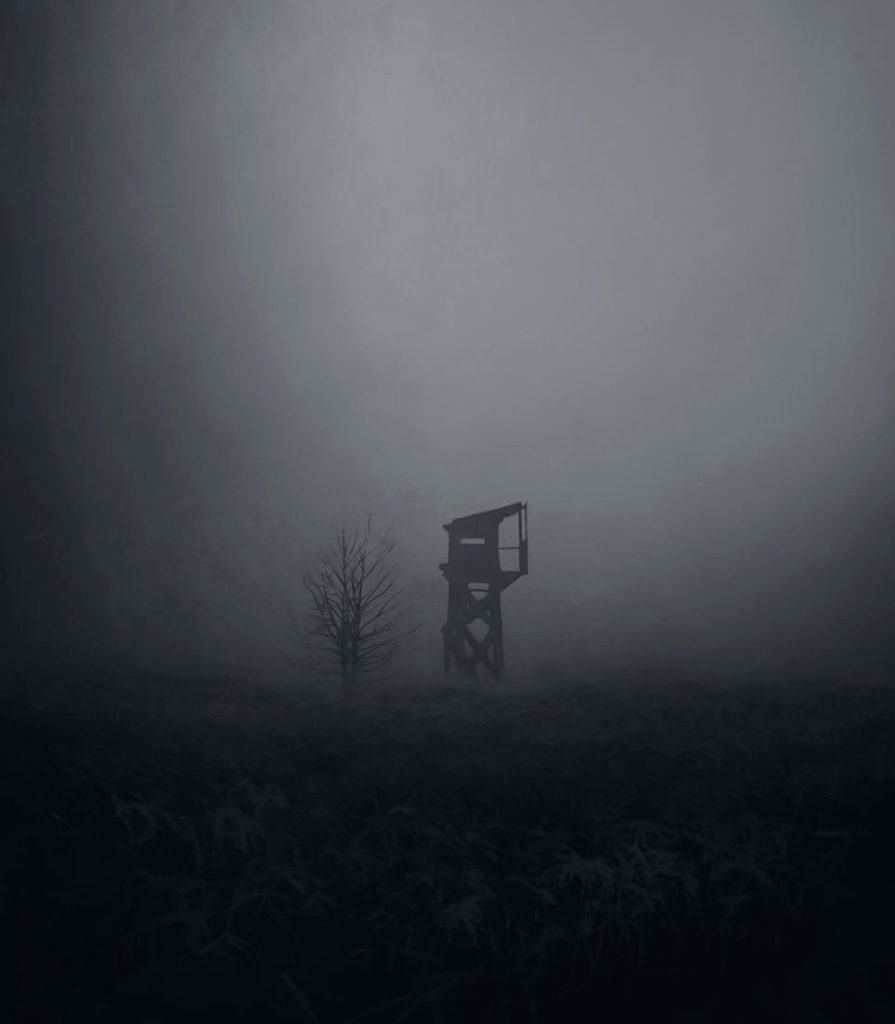
But if I want to understand more about the unspoken things in my family’s history, I reach for books from Poland. Here, the topic of poniemeckie, or what was formerly German, is a constant present in contemporary Polish literature but also in music and the visual arts. There are the essays by Adam Zagajewski and Tomasz Różycki, but also books like Karolina Kuszyk’s 2019 Poniemeckie (published in German in 2022 as In den Häusern der Anderen) which tells the story of how the new Polish arrivals arranged themselves with the leftover German infrastructure, or Filip Springer’s book Miedzianka. Historia znikania from 2011 (published in English as History of a Disappearance. The Story of a Forgotten Polish Town in 2017), which tells the German-Polish history of the titular town. Perhaps one of the best books about German-Polish identity and memory is Joanna Willengowska’s 2024 Król Warmii i Saturna (King of Warmia and Saturn), a deeply personal history of the author’s German-Polish father written in Polish, German, and the Warmian dialect which sadly remains untranslated at the time of writing. The region in which Joanna’s father Zygmunt and my grandmother Cilly were born serves as an inspiration for the 2023 album Singing Warmia by Warmia-born artist and DJ Zofia Hołubowska. The first track on the album bears the meaningful title “Forest of the Expelled/Las wypędzonych.” And in the painting cycle “Nocą będę opisywał słońca” (At Night I Will Describe Suns) by Katarzyna Szeszycka from the same year, the trees and the human infrastructure of former German Pomerania, where my grandfather was born, rise darkly and almost menacingly out of fog and moor. In many aspects, contemporary Polish literature and arts capture the European experience of exile, loss, guilt, and alienation better than their German contemporaries; as a result, they can at times also better emphasize narratives of hope and the chance of reconciliation.
The German experience of flight and expulsion was for decades portrayed in isolation from other countries; the fact that the upheavals of the 20th century affected all of central Europe must, for the moment, be found elsewhere. The same repression and concealment of displaced history that happened in the GDR was also imposed, until 1989, in the Polish People’s Republic on those from present-day Lithuania and Ukraine. In Germany after 1989 these stories were overlaid and perhaps drowned out by reunification and all the (failed?) nation-building that followed. There were no equivalents to the many publicly funded nationalist and right-wing expellee associations in Germany that tainted the public discourse. In a new, democratic Poland, the expellees, their children and grandchildren were given more space, and together with an interest in the former German architecture and topography that many in western Poland inhabit, perhaps that is the reason why the subject remains a current topic here.
I am saddened by the fact that this is not the case in Germany, yet. My grandparents, and many in their generation, only ever told their stories to the family. But that is understandable: their experience was the quintessential experience of migration and exile, one that is shared by millions in Germany past and present. They reinvented themselves, left their old selves and their old language behind, and became what Polish writer Emilia Smechowski calls Strebermigranten, overachieving migrants. They preferred to focus on the present and the future. But their silence allowed others to become the voice of the expellees, those with a nostalgic, nationalist-revisionist slant.
It is imperative for Germans today to accept the reality of a layered and complex history, of multiple identities and multiple Heimaten, and to talk about the brokenness and loss that many of us have inherited.
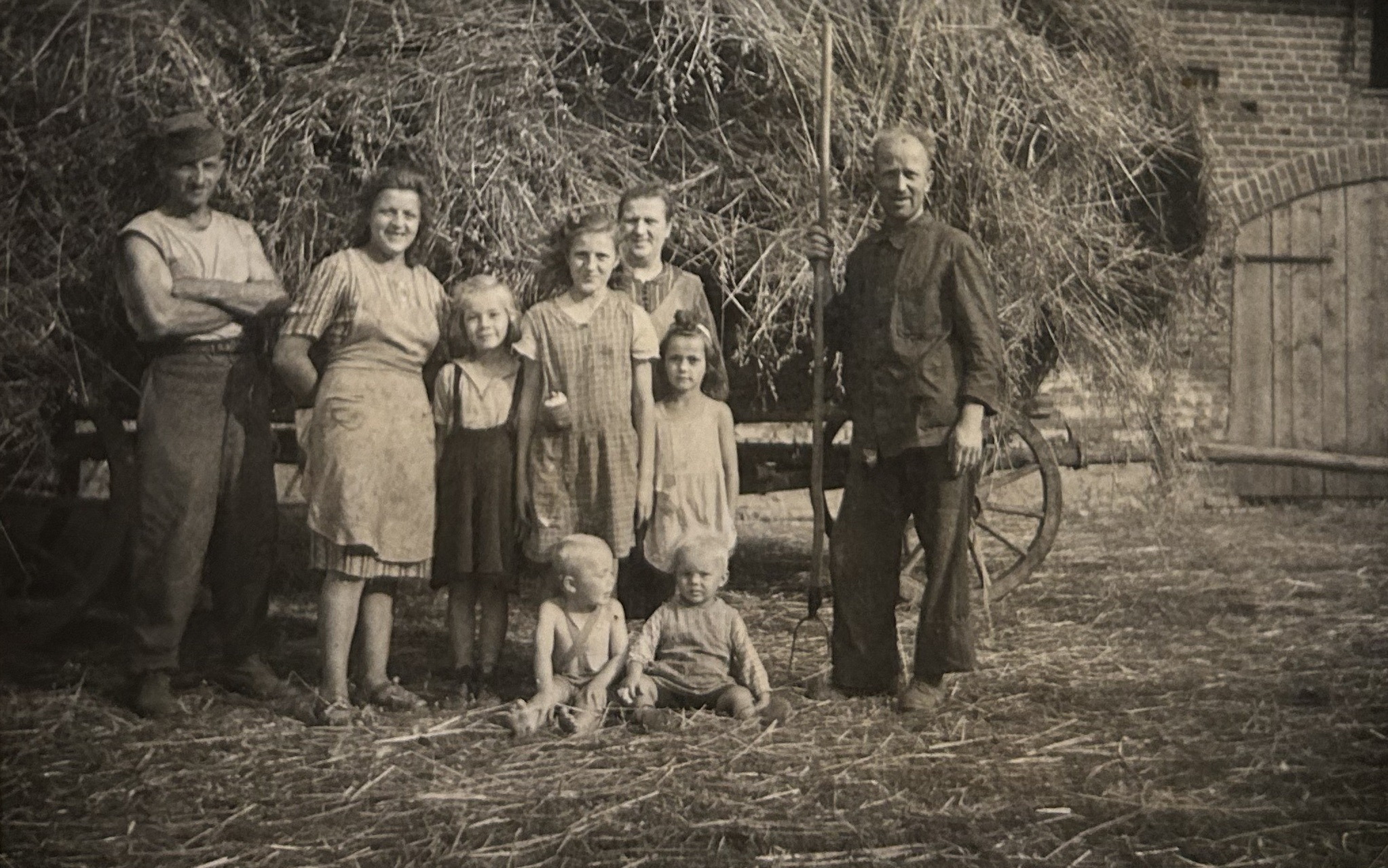
Living in a Europe that is becoming increasingly xenophobic and in a Germany where the CDU/CSU and SPD government pursues policies of exclusion, deportation, and closed borders in the false hope of winning back voters from the AfD, I must acknowledge the pain of my grandparents and the trauma that was inflicted on them — while at the same time accept that it happened because of the wars of aggression and extinction that Nazi Germany began. It is imperative for Germans today to accept the reality of a layered and complex history, of multiple identities and multiple Heimaten, and to talk about the brokenness and loss that many of us have inherited. Willi died in 2001 and Cilly in 2009, both without ever seeing their homes again, and are buried side by side in Solingen, a strange town that they ended up in by coincidence. They never wanted to go east even after the Berlin Wall had fallen, but since their deaths my family and I have visited their former homes a few times, and I’m a regular visitor to Warmia. But, like for so many others, my dead are everywhere in Europe. The grandparents and great-grandparents of many of my Polish friends are buried in Vilnius or Lviv. And my great-grandmother Ottilie, portrayed here squinting in front of a hay cart behind other family members including a grinning Cilly on the left, is buried in Barczewo near Olsztyn today, where she died in 1953. Even though she died in the Polish People’s Republic, her epitaph is in German but contains a spelling mistake. Maybe it was made by a stonemason displaced from the east of Poland, unfamiliar with these strange German words.