|
|
|
|
|
|
At the Polls
|
|
|
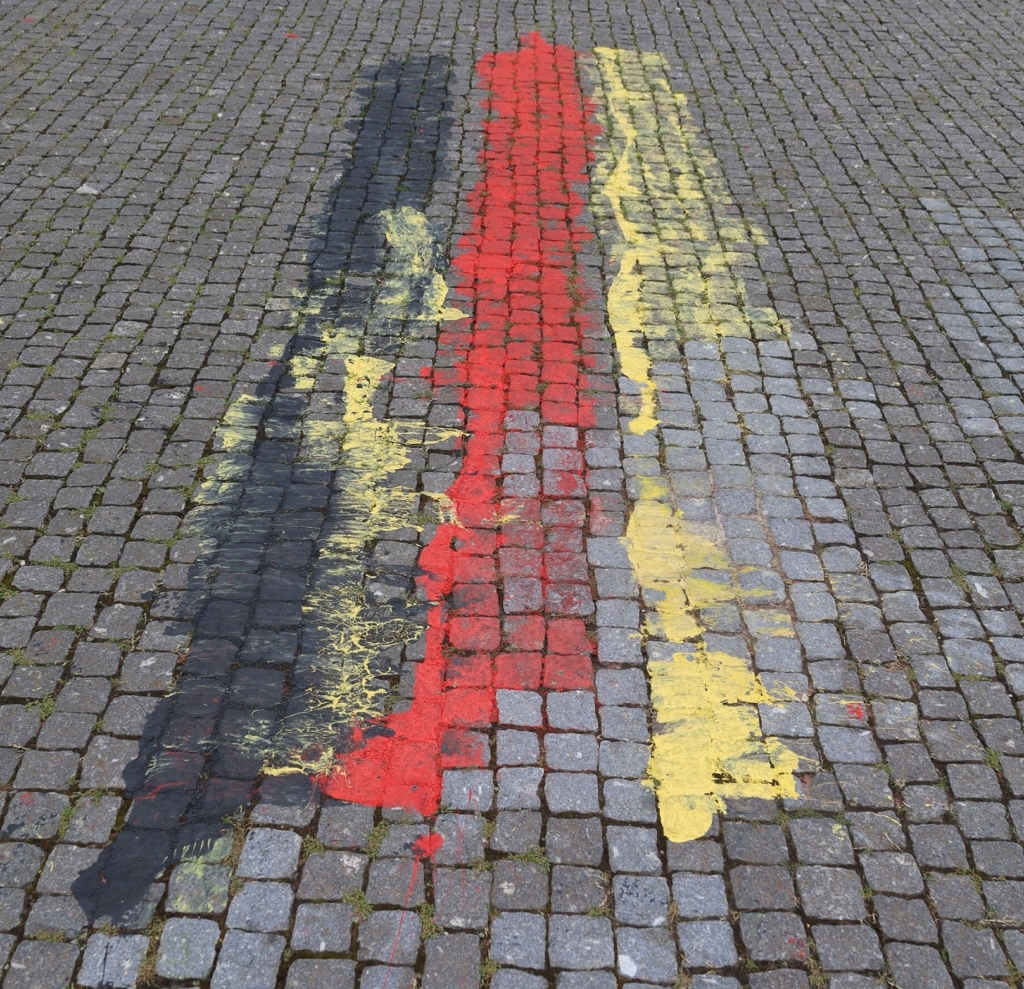
Photo: A German flag in Magdeburg that became the center of a minor controversy involving Ulrich Siegmund, lead candiate of the AfD in Saxony-Anhalt. Image courtesy of Wikimedia Commons.
|
|
|
In the days leading up to the state elections in Saxony-Anhalt earlier this month, Ulrich Siegmund, the AfD’s lead candidate, was interviewed for a children’s program on ZDF, one of Germany's public broadcasters. In a conversation about the teaching of history in schools, he said: “We can’t just keep feeling ashamed of our history. We’re not to blame for it.”
|
Several days later, Siegmund and his party received a historic 43.8% of the vote.
|
“AfD politicians would likely avoid discussing the Holocaust, if the need to deflect any suspicion of far-right extremism didn’t force them to address it,” writes Joseph Croitoru in a piece we published this week. “Through their ambivalent statements, however, they have long communicated what they really think about the Holocaust to the historical revisionists among their voter base.”
|
In his text, Croitoru, the author of the first German-language biography of Benjamin Netanyahu, analyzes the AfD’s evolving rhetoric on memory culture, antisemitism, and Israel. He traces the party’s electoral success alongside its strategic embrace of anti-antisemitism to suit its anti-migrant, Islamophobic positions.
|
Meanwhile, in the literary world, the shortlist for the German Book Prize was released last week in advance of the award ceremony in early October. With it has come an aggravating (if predictable) debate over the accessibility of literature. In “Diet Culture,” Alexander Schnickmann uses his love of the video game Elden Ring to argue in favor of uncertainty, of the pleasures that come when we embrace the wonder of the unknown.
|
“Literature that is strange, that challenges and speaks to us, that practically eludes us, calls into question the given world, and with it ourselves,” he writes. “In doing so, it fulfills its primary, perhaps its only, task.”
|
It’s been a busy summer here at the Diasporist. We’re on the brink of some big changes, and we’re excited to share what we’ve been planning for you.
|
For almost two years, we’ve been publishing work in two languages, with no paywall of any sort. If you enjoyed reading either of the pieces in this newsletter, please consider making a contribution to the Diasporist, even the amount of a cup of coffee.
|
|
— Julia Bosson, Editor-in-Chief
|
|
|
|
|
|
Joseph Croitoru
|
|
|
|
|
Meanwhile, since 2014, the AfD — and particularly its “Patriotic Platform,” which at the time represented the far right of the party — has been raising concerns about antisemitism, with an exclusive focus, however, on its alleged rise among Muslim communities. Alongside sweeping accusations of antisemitism against the radical Left, this limited focus aligns with the party’s anti-Muslim and anti-leftist platform. This right-wing, populist agenda is shared by the “Jews in the AfD,” a party group founded in 2018 that, for example, posted on Facebook on May 27, 2022: “Muslims are the biggest perpetrators of antisemitism!”
|
|
|
|
|
|
Alexander Schnickmann
|
|
|
|
|
There isn’t a lack of access, there’s much too much, and where there isn’t, the walls and manuscripts are simply smashed down, bent into shape, or leveled outright. The literary establishment has imposed a ruthless reign of realism, whose narrative economy couldn’t be more rigid. In this aesthetic “diet culture,” a novel is considered good when it has “not an extra gram of fat,” and with Chekhov’s gun at my back, I quickly discard the last colorful subplot. Everything is clear, everything is understandable. And horribly dull.
|
|
|
|
|
|
|
Donate to support our work.
|
|
|
|
|
|
Follow us on social media to stay on top
of what we’re planning.
|
|
|
|
|
|
|
|
|
|
|
|
